Senior Ecologist

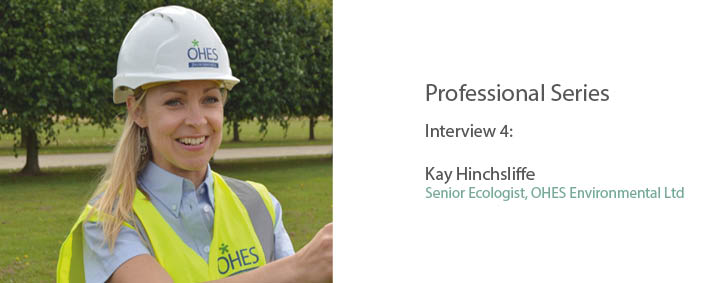
The fourth in our monthly professionals series; Kay Hinchsliffe, OHES Environmental

 Kay Hinchsliffe; Senior Ecologist

This month we were privileged to share the company of Kay Hinchsliffe, Senior Ecologist at renowned ecological specialists OHES Environmental. Unusually, I’ll leave the opening gambit to Kay, whose eloquence (though I tried, believe me), can’t be bettered…

“A childhood spent in the countryside pond dipping, dung hunting and woodlice collecting has inevitably led me to this career path – which is apparent in hindsight, but not necessarily throughout the journey. As a young adult and after a little travelling and soul searching, determined that I would single-handedly save the world, I completed a degree in Environmental Sciences. Here, I had some inspirational tutors who gave me the belief that everyone can make a difference in their own way to the environment – whether that be simply turning off a light or changing internationally policy.”

Kay has never stood still in her career, beginning life as an academic Research AgroEcologist and then Ecology Consultant before achieving her species licences and professional accreditations and taking up her current specialist role.

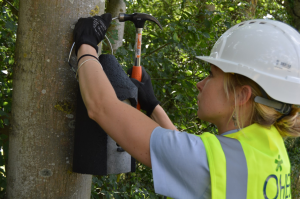
It’s evident the moment you begin to talk to Kay that she has a deep-seated love for the natural world and thrives on the diversity of her work which takes her from bat box consultancy at central London hotels, to knee deep sampling fish populations in rural Wales. She’s even designed mitigation to reduce the interplay between badgers and fighter jets on a MoD airfield but her favourite part of all is…

“working in remote sites, where you are reminded how small you are (and indeed your role is) in the grand context of the landscape and the natural environment”

It all sounds rather like a dream job so we asked her what the downsides were…

“Without a doubt, the physically hardest part of the job is the 2am alarm which precedes a dawn bat survey. There is no feeling quite like jumping out of bed, straight into your waterproofs with bat detector in hand, followed by standing in the dark for a few hours in the hope of catching a glimpse of illusive bats returning to their day roost as the sun rises…And the gratification of knowing that once you have found that roost, the bats within it, and indeed their surrounding habitat, will be protected and their longevity within that landscape maintained…”
 

Ecologist


Kay’s views on landscape and the environment are insightful, articulate and represent the much needed shift in attitudes that will serve to preserve this world for future generations

“We are all connected, whether by choice or not, to the landscape and our environment. Indeed, we all passively impact upon it and reciprocally the changes in the environment impact the way we live our lives now and in the future. Our connection with the environment is innate and deep rooted. I consider that we are custodians to this wonderful earth and it is our duty to work with the environment to facilitate the inevitable growth and development of humankind whilst reducing our adverse impacts and ensuring we pass on an ecologically diverse legacy to future generations.”

A big part of landscape architecture and indeed architecture can be working with ecologists to mitigate against environmental and ecological damage so we asked Kay what her views were on working with professionals in the landscape design industry.

“Good landscape design can benefit the ecology of the natural environment. I regularly work with Landscape Architects at the design stage of build projects where, as part of the wildlife mitigation, and thus planning condition, it is imperative that the site does not have an overall negative impact on the site’s ecology.”

Kay works with landscape architects to help them build solutions into their designs that overall create a net gain for wildlife. It would be easy for her to be viewed by professionals as a OFSTED style inspector, hindering urban development but it’s clear that Kay’s approach is one of collaboration rather than dictatorship and it’s our view that this method of nurturing strong professional relationships provides the best results for the ecology in both the short and long term. She takes the view of educating her clients and partners, thus building in good practices and policies that they can replicate on future projects.

At Studio 31, we consider ourselves conscientious landscape architects and it’s professionals like Kay that support us in improving our designs and methods for the greater good. It’s fair to say that most people we meet across this industry love their roles but with Kay it radiates from her very core and that is quite literally contagious.


Courtyard Garden

Landscape Design for Small Spaces: A Courtyard Garden

London Courtyard Garden

So, you find your dream house; great location, right number of bedrooms, ideal amount of character but there’s a compromise and its outdoor space. Or perhaps gardens just aren’t your thing, a big sprawling mass of weeds isn’t your idea of heaven so you opt for a smaller, hard landscaped courtyard. Either way, the house is the main event and you think your 4 x 4 metre courtyard garden is too small to do anything with. For the size, a bit of decking and a table and chairs is about all it can offer, right?

Wrong. With growing urbanisation and an ever-increasing population, garden sizes are on the decrease and whether you have a London flat or country cottage, courtyard gardens are becoming more and more common place. For this reason, outdoor space, however small, will always be at a premium and well-designed outdoor space will always add value (in more ways than one) to your home.

Just think if that outdoor space, were indoor space. You’d be willing to pay tens if not hundreds of thousands more for the same size and chances are you’d be ensuring that it was as well designed and thought out as the rest of your home. So why not the same for your courtyard garden?

There is many a YouTube video advocating the ingenuity of tiny houses. secret storage, multi-purpose furniture and clever décor giving the illusion of space but there are few of these relating to gardens.  We’ve written blogs before about the exponential value that garden design can add to your home and the chasm of difference between a London flat with no outdoor space and a London flat with some. Houses are no different. The British have a love and affinity with the outdoors and want a private piece of it as part of their home. And that is exactly what good design will offer.

One of our design projects here at Studio 31, due to be built in 2018 is a London courtyard garden for a beautifully renovated Victorian property in the up and coming borough of Walthamstow.

The clients had designed a Scandinavian influenced interior which was elegant even at the finite detail and they wanted an outdoor space which was an extension of this. With bespoke bi-fold doors allowing the two spaces to be connected as one, there was the potential for a truly transformative space when the garden was in use but also in being viewed from the interior.

The design needed to reflect the simplicity of the client’s thoughtful, minimalistic lifestyle so a paired down palette was used to reflect the Scandinavian feel. All the available space was maximised including making a feature from the boundaries to give the illusion of one whole space from interior to exterior. A sunken snug area rejuvenated the courtyard making it both look and feel bigger. Creating multiple levels within the space also gave the feel of outdoor “rooms” and therefore transformed the way the space could be used as well as increased its capacity as an entertaining space. It was important that every aspect of the garden flowed on from the house so even the furniture was bespoke designed to mirror the interior space. The resulting design really gives a sense of one whole space or stepping into additional rooms and really creates a sense of tranquillity in a busy urban lifestyle.

A small roof terrace or courtyard garden doesn’t have to mean you are restricted in terms of what your outdoor space can offer, in fact it can mean the opposite. In the same way as architects are considering to a greater and greater extent their buildings in the context of the wider landscape, Landscape Architects are being compelled to think harder about the bond between building and landscape. Small spaces, push designers to think beyond the norm, to explore spaces differently and make their designs not just innovative but put simply, better.

For more information or photos, see our portfolio page here.

Landscape Context

Landscape Indicators and the Context of the Landscape

Custodians of the Landscape

We’ve been talking in the office this week about landscape signifiers and their role within the wider context of landscape architecture. Just a few hundred yards from our office is a red telephone box, commonly held as a symbol of British landscape architecture. Within that telephone box though, is not as you might assume, a retro looking, metal telephone but instead a state of the art yellow defibrillator. Move a few miles west and you’ll find the same red telephone box exterior encasing a rolling art exhibition and further west still another big red box housing a miniature library.

With the rise of technology and the birth of the mobile phone, these beacons of the British landscape have become redundant to their original purpose. However, they hold such cultural significance that instead of removing them, they are being repurposed, re-used and recycled.

When it comes to man-made signifiers things like the red telephone box are obvious. People have a nostalgic affection for them because they say something about the character of the place. They are quintessentially English like the red post box, the London bus or the black cab. They help you orientate yourself in the landscape, they can be part of the infrastructure of a place and create a sense of familiarity. Signifiers however, could be more subtle; they could be ecological and provide us with evidence of the sensitivities or natural significance of a site. Landscape visual impact assessments often look to these signifiers in their many forms to help consider the character of a site and mitigate against any potential detrimental impacts upon it.

In the context of design, only this week Studio 31 designed a space in need of shelter and greater boundary from its wider rural landscape. We could have used a more traditional fencing or hedging method but within the context of this site there were some defining landscape features in the shape of distinctive landforms. Thus we looked to bunding to help shape the periphery of this site. This both fulfilled the client brief and also retained the character of the locale.

As Landscape Architects we act as custodians of the land, we represent its interests and it’s our job to retain the heritage, ecological or cultural significance of the place. That might be a wider social or historical context or it might be singular man made landmarks or iconic natural wonders. Our job is not to work with a blank canvas but instead to preserve, enhance and enrich whilst using the landscape’s existing signposts to show us the way.


Photo by Annie Spratt

Beth Chatto; Garden Design Essex

An Office Outing

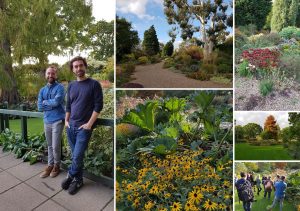
Some photos from last week’s office trip to the Beth Chatto Gardens in Essex organised by the Landscape Institute. Afternoon tea and a tour from the head gardener exploring some research based garden design methods including exploring which plants thrive without irrigation. Well worth the trip if you haven’t had chance to visit this hidden gem in North Essex. 


Garden Design Essex


Growing Underground

The Landscape Architecture of London Food

Growing Underground has been around some years but now more than ever some of its core values seem to be at the forefront of the British food and environmental industries.

The brain child of two men, Growing Underground simply put, is a business which grows about twenty different types of herbs deep under London’s streets. The Clapham based enterprise utilises disused air raid shelters to house a business which “aims to reconnect British consumers with local products”.

Growing plants with no natural light or water sources must surely though have a huge environmental consequence I hear you say?! Not so, Growing Underground prioritise sustainable growing practices and are working towards carbon neutral certification. Their hydroponics (without soil) system uses 70% less water than traditional open field farming and all nutrients are kept within the closed-loop system thus removing any risk of agricultural run-off.

Their snazzy LED light system means they can even adjust the light levels to meet the needs of the individual plant species (maximising growth) and they limit their food miles meaning their produce can be delivered sooner and therefore fresher (often within 4 hours of being picked and packed).

Quoted in the independent as saying

“We’ve got enough food to feed the planet, it’s just all in the wrong place”

…they made that into their business model and are setting an example for not just food businesses but all businesses across the UK.

From a landscape architecture perspective, the architecture of the landscape is constantly evolving to meet the growing demands of population growth and this means an ever present battle between buildings and open space. We’ve all heard of farmers’ land being sold to developers to make room for housing. It makes sense then, that as population density in urban space increases, so open spaces are declining. Farming forms a huge part of rural landscape architecture across the UK and this project argues that along with high-rise farms and the like, there are sustainable solutions to finding alternative places to grow our food.

So next time you fancy some pink stem radish, garlic chives or a pea shoot, spare a thought for an underground corner of Clapham where two men are challenging us to think differently about our food, our farming and possibly even our even our urban landscape.


Photo by Petr Magera

Nursery

The third in our monthly professionals series; Aaron Meadows, Darsham Nurseries

 Aaron Meadows; Nursery Manager

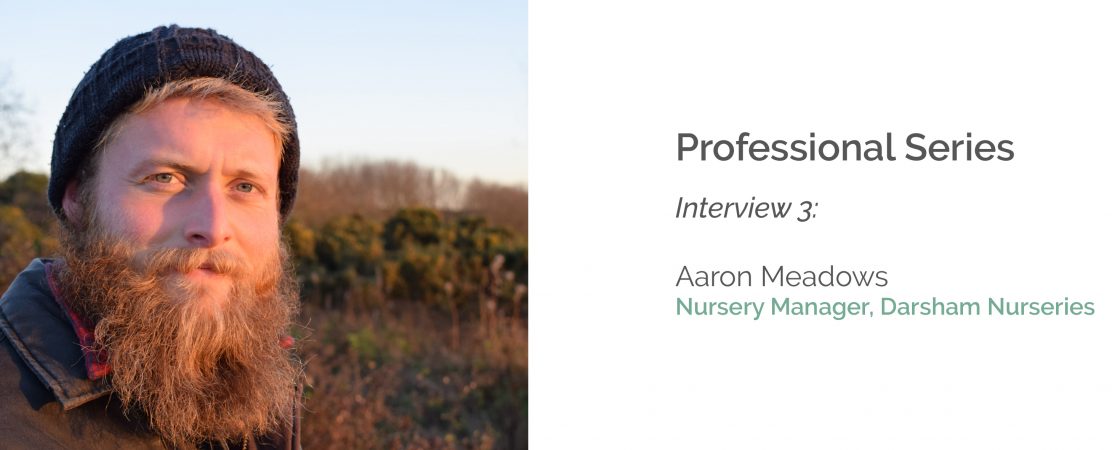
The third in our Professional Series Blog features the aptly named Aaron Meadows, Nursery Manager at Darsham Nurseries in Suffolk.

Like many of the people we have spoken to as part of this series, Aaron’s affinity with nature started at a young age working as a Groundsman’s Assistant at Cockfield Hall through his teens. His experience at this country estate gave him the opportunity to work with the British countryside in its rawest and most traditional forms.

Following school Aaron began a career in Butchery but the “contrast of working in stainless steel walled rooms and walk-in freezers to the open space and natural sounds and smells of the outdoors” pushed Aaron to return to a role that connected him with nature.

In a brave move away from the security of his butchery career, Aaron took a role working part-time, self-employed as a gardener at the newly opened Darsham Nurseries in Suffolk. This was to prove a risk worth taking as he quickly became an integral, full-time member of staff and more recently transitioned to Nursery Manager.

For those who haven’t visited Darsham Nurseries, it is a quite extraordinary place. David Keleel who co-owns the much admired business cites it as a “nursery first and foremost” but those who have visited recognise that it is so much more than that. The attention to detail here is more akin to a garden that one would pay to visit, with plants grown and displayed in a way that makes it a joy to just wander the rows of them.

Aaron cites his time at Darsham as “a rare opportunity to see and contribute to a business starting from scratch”. Darsham nurseries started life as a few plants sold from tables but now has a thriving client base who travel from miles around to admire (and purchase) Darsham’s home grown plants and produce. Darsham has a kitchen garden which, like everything else there, is an aesthetic marvel but more so boasts a wonderful array of vegetables which form the basis for the seasonal menu at their acclaimed café. To top it all off there is also a shop more akin to a treasure trove selling a selection of gifts, products and home ware with the same “quality, functionality and simple aesthetic that informs the whole nursery”.

The thing that is striking about Darsham is not only the attention to detail but the focus on local, seasonal and home grown; an approach to running a British business that is fast becoming a rare one.  It’s clear when you meet Aaron that his morals, ethics and values are very much in line with this ethos (and ours here at Studio 31) and yet for all his remarkable qualities Aaron is one of the most humble people, I have had the pleasure to meet. He credits Darsham with being “fundamental in building his knowledge of gardening, plants, landscaping, and running a nursery” and states his favourite parts of the job simply as;

“working with a diverse group of people with different ideas and experience in horticulture; that fascinates me. Advising customers on their unique gardens and gathering inspiration from their gardening experiences. Also …working outside every day, means I get to experience all weathers and seasons, plant cycles and the wildlife associated with them.”

What’s clear about that response is that despite his expertise, he still has a thirst for learning and he hasn’t lost any of his deep rooted passion for the outdoors. He also really grasps the strong connection between people and the natural world;

“A friend and colleague, Jevan Watkins-Jones has put this in great perspective for me in his Alternative Yellow Book, ‘People, Plants, and Their Roots’.  In this, Jevan interviews elderly people from the village of Dunmow, asking them about their memories of gardening and plants.  The strength of these people’s memories really emphasised to me the connection people have to plants and nature.”

Aaron spoke passionately about the diverse definition of a garden and the need for us to be considerate in our design to create a balance of aesthetic and natural benefits. He spoke about design “following the seasons through the cycle of plants, appreciating the beauty of all aspects of plants… whether that be buds, stems, hips, leaves, structure, and movement”

Away from work, Aaron is still wholly absorbed in nature and talks of his woodworking with equal measure of passion;

“I see real beauty in bringing out the character, highlighting the story of the wood, from saw lines where it was first cut to scratches and dents that it received along the way.  Saving materials that would otherwise be thrown away, and turning them into something functional and attractive is very rewarding.”

Darsham Nurseries is beginning to be reviewed across all the major media outlets, featuring more than once on the Guardian’s radar and is quickly becoming a major player in the world of bespoke garden nurseries. And whilst one cannot dismiss the extraordinary vision and perseverance of it’s co-owner David Keleel, one can’t help but just give a little nod to its humble but exceptional Nursery Manager, Aaron as well.

The Great Green Wall

A Beacon of Hope in the Environment

There’s no doubt about it, the environment is currently in global crisis; natural disasters are on the rise and we are bombarded with media snapshots of environmental damage and scientific reports on the state of the environment daily.

Environmental issues have rightly ploughed their way to the forefront of political discussion and the current government has been driven to pledge to be the first to “leave the environment in a better state than they found it” but in a world of negativity many organisations are arguing, it is all come too late.

Last week we were reading an article in National Geographic magazine on rising sea levels and the morbid reality that no matter what we change now, in 2100 most of the cities along the east coast of the US will be under water. These reports and articles are important but if all hope is lost, if it’s all too late, then where is the incentive to change?

Then amidst the deeply distressing messages, a friend sent me a link.

The link was about an African-led project called The Great Green Wall. Heralded as “one of the most ambitious projects of our time”, The Great Green Wall is a plan to grow an 8000km natural structure across the entire width of Africa.

The goals of this project extend well beyond being a bold response to climate change “in an area where temperatures are rising faster than anywhere else on earth”. It is a project which is growing food for the millions of hungry as well as giving them sustainable green jobs through which to build flourishing communities.

This project has the potential to quite literally grow peace out of war and grow love out of hate and as the last line of their powerful video states become “a symbol of hope that humanity can overcome its greatest threats”.

I suppose there will naturally be the usual questions about cause and effect. Could change on this scale have detrimental effects on for example local ecosystems, biodiversity and the like? But with the natural world deteriorating at an alarming rate and the levels of the poverty and hunger in this region at an all time high, surely there is enough reason here for the soothsayers and scaremongers to put down their pitchforks and give it a go.

I guess overall what this project has shown us here at Studio 31, is that however important the horror stories are (and sadly these are essential instruments of change), there are also a million stories of hope to mirror them. There are a million people making small changes; reusing, recycling, reclaiming. There are households buying bamboo toothbrushes or growing veg in their own allotments. There are businesses using vegetable inks and recycled paper. There are projects large and small like Get Diggin’ It, National Park City and a hundred more driving change. There is beginning to be a more universal recognition of this global crisis and growing from a single seed amongst the doom and gloom are also leaves of hope.

I refuse to believe all is lost. It is visionary, global and innovative thinking that can pave the way for change now and projects like these spark hope into the hearts of millions not only in Africa but around the globe.


Photo by Willian Justen de Vasconcellos

Tree House Design

Project Revisited: A Suffolk Tree House

Tree House Design

Working on our latest off-grid sustainable project for Elmley Nature Reserve has caused us to flashback to our unusual Tree House Project earlier this year.

We thrive on a project that pushes us beyond convention and our tree house project did just that. The brief was broad; create a versatile, year round summer house within the 19 acre estate. This gave us the scope to choose both a site and style that suited the landscape but was also bold enough to create interest. The tree house was a project which blurred the lines between architecture and landscape architecture with the structure itself being designed in-house as a combination of contemporary vertical lines and more traditional natural materials.

Sustainability was important here with the tree house being constructed from a host of reclaimed, recycled and natural materials as well as being off-grid in nature.

We agreed on a site which nestled the tree house on the trunk of a large oak in a secluded woodland area of the estate. The trunk of the tree was ideally located so that the veranda of the tree house would jut out over the large water body that formed a central feature of the wider landscape.

Never ones to give ourselves an easy time, the site was inaccessible and contained some sensitive ecology on the route up to it therefore all materials had to be carried by hand and assembled on site. The landscape surrounding the tree house itself was sympathetically designed to both enhance the existing woodland features and create framed views out to the wider landscape through the canopy.

The joy of this treehouse is that the location means you can only catch glimpses of it from the surrounding estate. From some aspects, it’s completely hidden and others it hints at something wonderful drawing you in. We have recently been back to see it weathering into the landscape and it is beginning to feel like it has always been there. It is now in regular use as a studio, library, summer house and even an occasionally overnight glamping getaway for kids large and small. We can’t wait to see it change through the seasons.

For more information or photos, see our portfolio page here.

Sound and the Landscape

Sound in the Landscape

Soundscape Ecology

When you begin your training in the realm of design the terms “function and form” are some of the first to be learned and these principals underpin design work across a whole spectrum of industries. We came across a product this week that got us once again considering overtly the balance of these two aspects.

Archittettura Sonora is the brain child of a group of acousticians, engineers, architects and landscape designers who (in their words) wanted to “redesign the reality of space and landscape through an immersive sound experience”.

We’ve talked in previous blogs about the sensory capacity of the landscape to be healing or transformative and sound is no different.

All this talk of sound got us thinking about the concept of “soundscape ecology”. Soundscape ecology is not a new concept but it is becoming increasingly talked about in the industry and there are calls for it to have its own formal branch under the heading of the more traditionally recognised “landscape ecology”. Soundscape ecology in essence is the collection of sounds which emanate from the landscape both biological and man made.

Many of us have stood in the landscape listening to the sound of the wind through the trees on a blustery day, birds twittering in the hedgerows or the waves crashing against rocks on a stormy coastline. There’s no doubt the sound of the natural landscape is important and often emotive. Clients increasingly talk about their gardens or landscape in sensory terms and sound specifically is becoming increasingly synonymous with ideas about well being like mindfulness. So what of the man-made aspect of sound?

Many human-derived sounds in the landscape are by-products of human activity but when it comes to design many of these can also be deliberate. Consider, for example, the increasing number of immersive sound exhibitions popping up across the art world and the positive reaction of art-goers to these.  The impact of sound on the human experience of our environment is increasingly being recognised as not only significant but sometimes profound. So how does that relate to our work as landscape architects?

When designing landscapes our clients often have a wish list which is both aesthetic and functional and it’s our job to merge the two seamlessly. Because of this, when it comes to detailed design, we very often need to design bespoke items because “off-the-shelf” products often seem to solely consider function over form. This approach works well for items like fire tables, garden furniture or water features but some items require greater levels of technical engineering or expertise. Traditionally when it comes to designing in sound, garden designers have looked at hiding speakers in the landscape; nestling them inconspicuously in the undergrowth or placing them high above the eye-line attached to the walls of buildings.

Here at Studio 31 though, a part of our ethos is about uncompromising design and whilst striving to achieve this, occasionally we come across a company like Archittettura Sonora. These guys provide a design solution with a higher functional specification than the average market leader at the same time as considering the speakers themselves as a part of the landscape; a deliberate feature rather than a hidden necessity.

And that for us is where they have hit the nail on the head. Design should be deliberate, uncompromising and immersive, subtle, beautiful and sensory. Sound forms such a huge part of the way we understand the world and if we take a moment to just listen, we might recognise the powerful role sound has to play in design.


Photo by Alphacolor

tree

The second in our monthly professionals series; Carl McClean, Tree Research Ltd

 Carl McClean; Project Manager

This month we are meeting Carl McClean, Project Manager for Tree Research Ltd.

Carl started out life in the landscape industry aged just 16 and whilst working for a landscaping company at home in Ireland, he was well and truly bitten by the industry bug. He went on to study Landscape and Amenity Management and in the subsequently decade has worked in roles across the industry doing everything from training horticultural apprentices on community gardening schemes to managing a multi-million pound redevelopment project as Park Manager for North Tyneside Council. Under Carl’s direction the Park went on to gain successive Green Flag Awards and as if that wasn’t enough, he then also took on managing a 400 acre country park and outdoor education service.

Carl is someone who wants to bring about change and I suppose it was therefore inevitable that having been instrumental in creating an award winning Park and Education service, he was going to hand the reins to someone else whilst he sought out his next challenge.

Carl relocated over 300 miles to find his next role and now works for Tree Research Ltd, an innovative and unparalleled company renowned for sourcing, supplying, planting and aftercare of mature trees and topiary.

True to form, Carl boasts a role where saying “it can’t be done” is rarely an option. He works alongside Charlie Noton and a team of specialists whose knowledge and expertise of trees mean that they can successfully complete projects that other companies simply can’t.

To give you an idea of the kind of work Tree Research do, Carl recently completed a project which entailed manually handling 8 large beech topiary (each around 750kg each) within a walled garden. The lack of access for machinery meant there was no room for error and just to add a little extra pressure, the garden was also open for NGS the following weekend. In a few weeks time Carl will be crane lifting 17 trees over an exclusive property in Bath and the following week landscaping a front garden with a 200 year old Cedar tree in Cardiff. In his words:

“My role is pretty varied – and I like it that way”

Trees play such a big part in the landscape and as such within landscape architecture and it’s clear Carl has an intrinsic understanding of this connection;

“The ability to plan a project from the start and see a tree established immediately is a real thrill. A lot of people have reservations about moving large trees but this sort of practice has been carried out for centuries. Humans have an ability to sculpt the landscape and create beautiful places that work alongside nature. It may not be referred to as fully ‘natural’, but neither is Stone Hedge, or Machhu Pichu, all forms of life change their environment. As long as it is carried out in a sensitive manner then it can be a wonderful thing.”

Carl’s connection to the natural world is more than just a day job, it’s a part of his soul. He is considered in his approach to nature and has an innate understanding of the sensitivities and vulnerabilities of our natural world but with an extraordinary attention to detail and knowledge of the landscape industry.

Here at Studio 31, it’s no secret we have an inherent love of trees and they are a key part of so many of our projects from private tree houses to our country estate work and so the opportunity to interview Carl was a personal treat for us. When we choose consultants or professionals to work with, we look at more than just their job title or credentials, we are looking for their broader understanding of our vision for the project and the client’s aspirations too. We are looking for an attention to detail and ethos similar to our own and Carl certainly embodies that. It’s clear that he doesn’t see his job as just moving trees but thinks of it in terms of design and the broader impact and contribution of that tree or trees to the landscape. He seems to understand the importance of design from a conservation and regeneration perspective as well as for personal and aesthetic pleasure and that broader understanding clearly feeds into the success of his work at Tree Research Ltd.

We will leave the last word on trees to him:

“I can’t image not working in this industry. I have an affinity with the outdoors and a genuine love of being involved in the creation of landscape; not just for visuals, but for people to experience. There is so much that we can’t really write down in terms of the effect different trees have on us as humans – their different characteristics – texture, stature, presence, movement…all of these connect emotionally to those who will allow themselves to experience it.”

There’s not really much more to say than that is there?