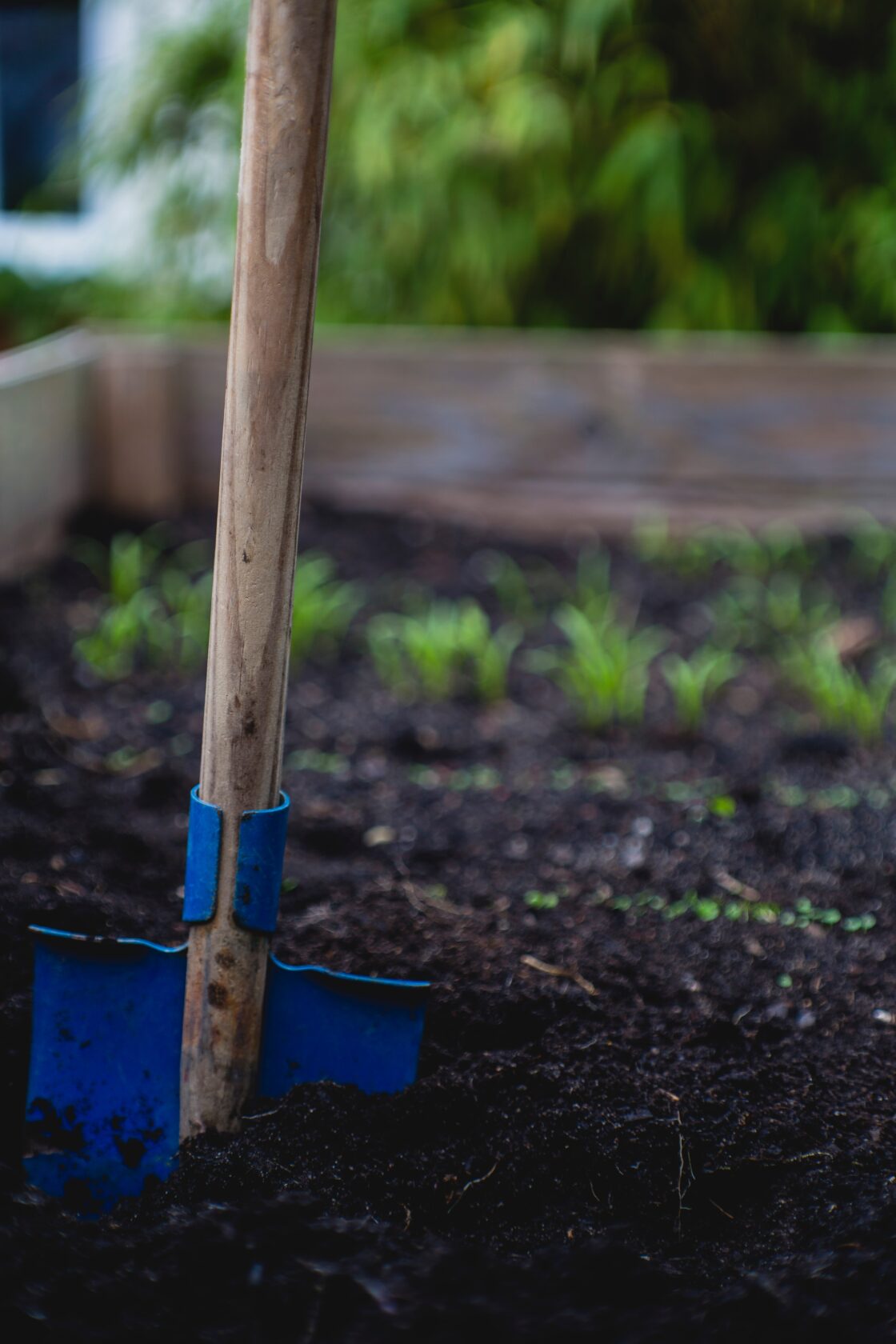
Get Diggin’ It: Growing a Community

“A Community Garden with a Difference

Through our work in landscape architecture, we often get to meet quite extraordinary people and a couple of weeks ago, we met with someone who most definitely fitted this bill. Jenny Lynn is a Director and Founder of brand new not for profit organisation Get Diggin It, which aims to get local communities engaged with growing and eating their own food.

The project has taken inspiration from a number of exceptional places and people from Ron Finley (whose Ted talk we posted here a few months ago) to Kurtis Stone, from the tireless work of organisation Incredible Edible to the Fleet Farming project in the US. Get Diggin It, was born from a simple seed and is growing to be something that could change the way communities view their food.

The basic principle behind the project is to take unkempt or unproductive spaces and transform them into community vegetable gardens but these are more than just your average allotments, they are trans-formative spaces from which to educate and inspire communities about the health, wellbeing and environmental benefits of growing your own food.

Knocked sideways by the statistic that 73% of all our food is supplied by the top 4 supermarkets, Jenny highlighted that with community food production as it stands, we can’t feed ourselves without reliance on these large corporations. Her idea is that every community should be self supporting, that food can be grown locally and eaten locally (and seasonally) and that is better for everyone. It’s cheaper (in fact, it’s free!), it’s healthier, it’s fresher, it supports the local economy and it’s sustainable.

Community Garden

Jenny walked me around one of their gardens and the most striking thing about it was the incredible lack of waste. Not only does nothing go to waste in these spaces but they actually use other people’s waste products to create everything they have. They bring a whole new level to the terms reclaim, reuse, recycle. This entire garden was formed from other people’s “rubbish”. A greenhouse which Jenny described humourously as “a little too effective” was ingeniously fashioned from plastic wrapping donated from a local builders merchant and scraps of wood left abandoned at the side of the road. There were vegetables growing in paint pots, seedlings in mushroom cartons and even bird-scarers made from leftover takeaway boxes. Nothing was “new” and yet everything was thriving.

The team behind ‘Get Diggin’ It’ are innovators, using their expertise and ingenuity to not only create edible gardens but more than that to spread the wider, deeper message of what they do across this community and also far beyond. The model they use is one that can be scaled, it leaves room for adaptation and change to fit the dynamic needs of other communities across the country and so this project is a little like the vegetables it creates, organic.

One question burned in my mind though. When talking to Jenny, it was very clear to see her passion and enthusiasm for this project but it was also obvious that it takes an inordinate amount of her time and energy too and I couldn’t help but wonder “Why? Why did she start this? And why does she give so much of herself to it?  Why does she want to go into schools and educate children about it?” I asked her the question and her response bowled me over, “It’s about being human.” She said.

And she couldn’t be more right. This project brings communities together, it forms friendships, combats loneliness, helps people eat well, teaches people about food and helps communities become self supporting and ultimately more resilient. It’s not just about vegetables, its about people, it is quite literally about being human.

Here at Studio 31, we spend all day every day transforming landscapes, taking a plot of land or earth and creating something new, exciting or innovative. We consider ourselves industry leaders, we watch our carbon footprint and do our best to be conscientious in what we do as a practice but for all our expertise, it’s fairly humbling and also pretty inspiring to see how one organisation, one person really, can use a patch of land no-one wants to quite literally “grow a community”.


Photo by Markus Spiske

Sussex Garden Design

Sussex Garden Design: A Project Update

A Hidden Gem in Brighton”

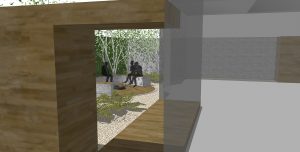
We wanted to share a brief update on one of our Sussex garden design projects which is currently onsite being built.  The site itself really harnessed the skills of our design team as it comprised a series of small narrow spaces surrounding the central house. People often think of a garden as a square or rectangle shape at the rear of a property but this home, almost entirely hidden from the road was encased on all sides by seemingly unusable space. This meant the challenge was to maximise the size of the plot whilst also connecting the smaller spaces together.

Our clients themselves had already completely redesigned the interior of the house and wanted a landscape to match their astonishing attention to detail on the inside. They set the bar extremely high and so we set our goal to exceed their expectations.


Sussex Garden Design


Our design, first created a sense of arrival, something that had previously been missing from the site and then looked to create a congruous and cohesive set of spaces which complemented each other rather than felt entirely independent. Our clients really wanted the build of their garden to remain true to the design and were even bold enough to take our advice to change colour of the outside of their home.

Being a small and awkward space initially, it was important the garden really captured both the personalities of its custodians and the spirit of its location. The whole scheme reflects the eccentricities of Brighton culture and the features within the garden spaces themselves also capture the passion of our clients for entertaining. Next on the build list are a custom-made fireplace, new barbeque facilities and best of all, their very own bespoke gin bar. We can’t share too much just yet but the results are looking to be astounding.

Head to our portfolio page to read more…


Texture of the landscape

Texture in the Landscape

Keep off the Grass”

Last weekend I watched my toddlers running their hands through the grass borders at Wimpole Hall whilst anxiously looking over my shoulder to check no-one was watching. It was like we were doing something naughty and this got me to thinking about the texture of the landscape and our interaction with it.

So often gardens and landscapes are thought of as purely aesthetic, something to admire, view from afar, take photos of. The idea of a “show garden” supports this perception, with ropes and boundaries cordoning off the gardens from the general public, leaving people jostling for the best vantage point. Wandering around country estates you are bombarded with signs commanding “Keep of the Grass” and there’s more of the same at a whole host of landscapes and open spaces across the UK.

Thinking of handrails and instructional signs, my mind reflects back to thoughts of my time in Australia; climbing the local mountain in a pair of trainers and perching myself precariously on a warm rock at the top to breathe in the view. Below me a sheer drop of several hundred feet and not a hand rail in sight. I have never felt freer.

There are lots of reasons behind this culture of restraint with regard to touching the landscape: The idea of safety “don’t climb the trees, you might fall out”, the ever increasing blame culture “if it happened on your land, it’s your fault”, the idea of preservation; our natural world is more fragile than ever before but I can’t help but feel that the landscape was created to be not just admired but experienced. Can gardens be truly understood from the outside? Or is it our interaction with them that makes them so captivating?

The landscape should be felt, touched, smelled and tasted. Kids should climb trees, roll in the dirt and run through meadows of long grass feeling the stalks whip against their faces. Seeing pictures of landscapes and even architecture on social media, how often do people comment about “contrasting textures” and how often are we are drawn to the ones which make us want to be there, want to touch them.

Of course preservation is important and sometimes segregation is necessary but so is education and responsibility. We should teach each other and our children to enjoy the landscape with respect. Teach them to feel the textures of grass on their feet and bark against their hands but to do so whilst taking care. We need to remember to be gentle, to be kind, to never take more than we need and to use our interactions to improve rather than destroy.

On this planet, there is barely an inch of earth that is untouched by the hand of man so good design is ever more important. It is the responsibility of Landscape Architects to be custodians of the land. Their designs shouldn’t just look remarkable but feel remarkable too. We should create spaces which are dynamic and that encourage rather than restrict human contact so that people can be experiential in learning the value of the natural world. And if we can achieve that, if we can educate future generations to interact with the landscape in all its many textures and colours, we have the power to show people how to place a value on the landscape higher than any monetary one.

A child of the Landscape

Child’s Play

A Child of the Landscape

I consider my kids to be lucky. We spend the vast majority of our time as a family outside. They get to interact with the landscape in all kinds of remarkable ways and pretty much permanently have their necks arched to the sky shouting “bird” or “tree” in their chirpy toddler voices. Seeing their wide eyed faces and boisterous bodies running through forests, crunching on leaves, throwing pine cones and generally covered head to toe in dirt, has led me to want to touch on the importance of the interaction between our children and the landscape.

As landscape architects, it is a common perception that we only really design for children when the project dictates it; playgrounds, schools, nurseries and other similar child focused environments. But should we be designing for children in everything we do?

Outdoor play is linked with the physical, emotional and psycho-social development of children. It has been linked with confidence building, the development of both fine and gross motor skills as well as muscle-strength, coordination and enhancement of ability to learn.

More than this, interaction with the landscape gives children from an early age, the chance to understand the importance of the natural environment to our world. My son only yesterday pointed out the wind blowing in his hair which prompted me to spend 10 minutes trying to explain the environmental importance of the wind to my son’s two year old brain. From the quizzical and confused look on his face, I’m fairly confident he had no idea what I was talking about but nevertheless, just being outside had got him asking questions. Interaction of children with nature leads to discovery, to greater understanding and to learning.

Children interact with landscape in a way that is unique to them. They run their fingers along hedgerows, peer into ponds and roll on their bellies down hills. Landscapes to children are there for interaction not observation and they reap the benefits of this tactile approach.

If we really think about it, most of our projects here at Studio 31 will come into contact with children in some form throughout their life cycle. A residential garden might double as a family play area, a commercial project might be located on the way to school, a health care centre might provide treatment for children or their parents and relatives. We are given the brief for schemes by adults but when we design them, it is not only those adults who will benefit from them. There are plenty of architects like Matt Architecture who already try to inject just a little inner child into some of their schemes and I wonder if this ethos could apply even more so for the world of Landscape Architecture. Perhaps our designs should not only fulfil the adult brief but go further to consider both the interaction of our children with them and perhaps even the inner child in all of us.


Photo by Alexander Dummer

Garden. A definition

What is a Garden?

Work demands made it impossible for us to go to the RHS Hampton Court flower show last week but following the award winners on BBC sparked a lively debate in the office that we felt compelled to share.

The conceptual gardens at Hampton court this year comprised a vibrant selection of weird and wonderful ideas including; a garden elevated above a clear water tank making an effort to explain the science behind soil (which, as a science geek at heart, I loved) and a plot of accessorised Himalayan Birch trees representing the molecular structure of a solid object. These conceptual ideas transformed into garden designs harked back to Chelsea’s best in show only a few weeks ago where James Basson’s gold winning garden was inspired by a disused quarry. There wasn’t a rosebud or foxglove in sight and if the daily mail headline was anything to go by, it’s fair to say he divided opinion. So, in our small Essex office, we pondered (or rather argued), if these are award winning “gardens” then what actually is a garden?

We know this isn’t a new debate. It was in fact one of the first questions asked many moons ago on one of our Director’s degree course but the debate got so heated, that at one stage we actually looked up the Oxford Dictionary definition “a piece of ground adjoining a house, in which grass flowers or shrubs may be grown” And at that point, we all agreed that we disagreed with this one, which in itself was interesting. Does a garden have to adjoin a house? Does it have to be a piece of ground? Does it have to grow grass, flowers or shrubs?

We all have our opinions of what a garden is and the definitions are as broad and encompassing as the gardens themselves are diverse. Is a window box a garden? Does a garden have to have plants? Could it be entirely hard landscaping? Do you need to be able to sit in it? Walk through it? Or perhaps just admire it? What about terrariums? Greenhouses? A jungle of indoor plants?

Critics are saying that designers are taking the “conceptual” element of design too far and supporters are hitting back that good design should spark debate and push conventional boundaries. I suppose this is especially pertinent in competition settings like the RHS flower shows.

From a portfolio perspective, we have to admit that if you look even solely at our current projects, there is such variety there. They range from the traditional country estate, to health centres, tree houses, roof terraces and the contemporary modern home.

Our conclusion…the rather wonderful thing about a garden is it defies definition. It can’t be restricted by the confines of a dictionary or a placed neatly into a labelled box (no pun intended). A garden is a feeling, a dynamic, vibrant and ephemeral concept all of its own.

So, is a rather beautiful pomegranate tree and some meadow plants suspended above a glass box, a garden? Perhaps the question should be; why isn’t it a garden?


Photo by feey

Grass amphitheatre

Grass Amphitheatre Design

How to build the perfect grass amphitheatre

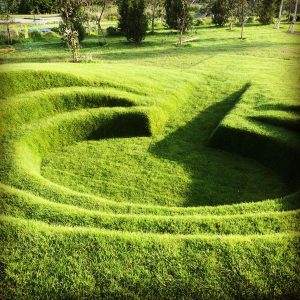
What a fun couple of weeks we have had taking it in turns to go to site to see our grass amphitheatre design come to fruition. In light of this and not in our usual blog style, we thought we would offer some top tips for creating the ideal amphitheatre:

Consider the design. Do you want your grass amphitheatre to grow above ground, dig down below or a bit of both? Remember that you may require planning permission depending on the site and design so it’s always worth seeking advice. Consider also, the use of the amphitheatre. Is it an entertaining or a social space? Will you be using it as an intimate space for an open fire or more of a public area for a theatre/concert? All these aspects will dictate the shape, size and design of the amphitheatre itself.

Know your soil. You need a soil which will retain its shape but also have an element of free drainage. Too sandy and it won’t hold its shape, too much clay and you’ll have issues with drainage. A good loamy soil with some sand content usually works well. Good quality suppliers can help you here.

Layers. Build the mound up in layers, compacting as you go. Usually an amphitheatre starts life as a general mound shape which is compacted and then from there you can cut in your desired shape.

Keep the face slightly damp. Don’t let your mound dry out too much before you apply the turf.

Grass Amphitheatre Design

It’s a good idea to let your finished mound shape settle before you apply the turf. We left ours for a week and then did some final finessing of the shape by hand before the turf was applied.

Know your turf. A grassfelt like the one we used from Lindum turf is ideal. It’s a soil-less grass growing in felt which holds the soil in place below whilst the turf establishes. Moreover, because grassfelt is grown for its strength and flexibility, it is easier to lay and retains moisture better.

Water it! Once you’ve finished your mound, just like any newly laid turf, you need to water it. Be cautious though that you aren’t too over zealous because if water gets behind the turf, it will affect the shape of your mound. With the weather so hot, this has been the hardest part of the project for us.

A good contracting team are essential here. We used a digger driver with a lifetime of experience and watching him work was a joy. The digger was an extension of his body and the smoothness with which he carved the design was akin to an artist at work. Some of our team were so inspired, they even chose to get their hands dirty and join in with the finite detail of the build.

It’s not clear whether it’s the client or us who is more overjoyed with the results but it’s been a pretty special project to be a part of all round. The family plan to use the amphitheatre for intimate social gatherings huddled round an open fire and in the summer month’s private parties and performances by their very talented friends and family.

It’s a tricky process to get right and our advice would be if you don’t feel confident to go it alone, getting a professional landscape architect like Studio 31 involved can often be the best route. That way, you can let someone else take care of the planning and logistics and be confident that the end result will live up to all your expectations.

Forests

Tree Talk

How trees are co-operators not competitors


Suzanne Simard is an ecologist who has conducted 30 years research into Canadian forests and last year she made an exciting discovery that trees communicate in ways that are not dissimilar from human interaction. In her illuminating Tedtalk she discussed her theory that trees do in fact talk.

Her theory was that forests can behave as single organisms and her results showed that far from being the fierce competitors for light and resources that we previously thought, trees are actually some of the best co-operators of all organisms.

Trees are connected with mycelium (put simply threads of fungus) that grows through the soil and coats the soil particles. There can be many hundreds of kilometres of mycelium under every footstep and it is this dense web which facilitates lively conversation between trees.

Suzanne’s research found that not only do trees help their own species through providing carbon, nitrogen, hormones and other information but they also help other species of tree. For example Douglas Fir and Paper Birch seem to have a symbiotic relationship whereby the fir transmits carbon to the birch in the summer months when it has an excess and the birch back to the fir in the winter when it has lost its leaves and needs less for itself.

Not only this but Suzanne discovered that there are hub or mother trees in the network who are responsible for nurturing the young saplings as they grow. The research found that mother trees can recognise their own kin and will send them more carbon, create bigger mycelial networks and even reduce their own root competition to make space for their young. Not only this but when hub trees die, they send both carbon and important defence compounds to their seedlings to help increase the resilience of the forest as a whole. Mother trees increase seedling survival by up to 4 times.

So what does this mean?

It means we need to take greater interest in our local forests. We need to take responsibility for helping them cope with climate change and we need individually tailored forestry programmes delivered locally rather than a one size fits all approach. We need better management of our logging and felling processes to ensure that mother trees are preserved and allowed to pass on their vital resources and information to their young.

We need to save our older forests as these are the ones full to bursting with mycelial networks, genes and hub trees and it means we need to consider how we plant our forests so that they have the diversity of species that will allow the forests to naturally regenerate and subsequently utilise their extraordinary power to self heal. This research has the power to shape a whole new approach to forestry and in the year that has passed since Suzanne’s tedtalk, has already begun to do so.

We think of forests as just collections of trees but what this research has found, is that they are complex systems of hubs and networks that communicate, cooperate and care for each other in ways that are much more like people than plant.


Photo by Abigail Keenan

Natural Capital

Natural Capital

Ambitious plans to manage and protect our Natural Capital

With the Natural Capital Committee (NCC) having published its 4th Annual Report in January this year and with the general election just days away, we thought now might be the right moment to touch once again on the very important topic of England’s Natural Capital and how to protect it.

For those who don’t know what Natural Capital is, it can be defined as the world’s stocks of natural assets which include soil, geology, water, air and all living things. From this capital, we derive a wide range of services (often called ecosystem services) which essentially make human life possible. With that in mind, Natural Capital is a pretty important topic.

The NCC was re-established in 2016 in order to advise the government on the development and delivery of its 25 year environmental plan and earlier this year they released a new report detailing their recommendations of the somewhat radical changes the government needs to make to manage and make best use of our Natural Capital.


So, why can’t we just take what we need from the environment?

It could be likened to the financial market, where if we borrow money and spend more than we have, we are left with debts we are unable to pay back. The natural world is the same, if we take too much from the environment, the short answer is, it could lead to global ecosystem collapse. A straightforward example of this would be trees. If we cut down all the trees in an area (perhaps for fuel, product production, to clear space to build houses or a whole range of other reasons) but we don’t plant new trees, the simple fact is that we will eventually run out of trees. The impact of this being perhaps obviously no fuel and no product production but more significantly no clean air or water, greater risk of flooding or drought, loss of habitat therefore loss of certain flora and fauna and eventually long term damage to or loss of local and wider ecosystems.

Essentially, if we do not manage our natural capital effectively, we run the risk of putting ourselves at ecological, social and economic risk. Even if you aren’t a believer in protecting the environment and your motives are purely economic, the value of our natural capital in financial terms is priceless. Don’t believe me? A 2014 study published in the Journal of Global Environmental Change revealed that the total value of the World’s ecosystem services amounted to in excess of $124 trillion per year. That’s twice the global aggregate GDP.


So what can the government do?

This new report is pushing the government to make bigger and braver changes faster. It’s recommending that instead of the, until now, fairly ambiguous targets, the government begins to make itself accountable. The paper recommends “quantifiable and measurable” outcomes which are put to scrutiny under an independent body,

The NCC wants a new white paper to map out future legislation and for natural capital to be financially valued and for these valuations to guide budgetary decisions and future investments.

Importantly, the paper recommends integrated legislation. It wants the protection and management of Natural Capital incorporated into the climate change committee’s latest budget and post-brexit policy creation.

It advises that Natural Capital should no longer be a stand alone agenda item but be an integral part of government legislation and decision making across the board. Essentially it’s saying policy needs to be joined up at its very inception rather than added as an appendage to existing legislation. The NCC report has even set out how a range of public bodies should increase their engagement with the concept of Natural Capital including National Parks, The Office for National Statistics and The National Infrastructure Commission.

As a landscape professional, it’s heartening to see that finally the value and protection of our natural world is beginning to creep into core policy making processes at a national and even international level. That doesn’t make it any less important for each one of us to get involved and do our bit but the government is being called to order on its objective to be “the first generation to leave the natural environment of England in a better state than that in which we found it” because this new report finally challenges the government to produce a similarly ambitious plan in relation to Natural Capital. Let’s hope the next occupant of 10 Downing Street is up to the job.


Photo by Matthew Walsh

Chelsea Flower Show

Gardens for the Love of Gardens

With Chelsea Flower Show in full swing this week, we sent one of our Directors off on a jolly (I mean “networking”) day to report back on this years flower show delights and all this talk of Chelsea, got me to thinking…

We all know Chelsea flower show is the gold standard of garden design. It is the elite, the Oscars of the garden design world. It’s where every self respecting designer aspires to be; battling it out for one of the much coveted Chelsea Flower Show medals and with a bit of luck and a fair wind, maybe that medal will be a gold. We’d all love to win gold at Chelsea and though most of our team have in some shape or form been a part of gardens at Chelsea, whether that’s joint efforts, planting teams or general dogs body, we’ve yet to exhibit our wares on Main Avenue as a practice and we’ll be first to admit, that yes, that’s part of the dream. But I wonder, is that all it is?

And the answer quite simply, is no. Chelsea for us is like a conference. Strange though it sounds, it’s a huge and diverse learning experience where garden designers, landscape architects and professionals from across the industry come together to create. There’s passion there, in abundance. Where else can you attend an event which showcases the best work, from the best garden designers across the world? Where else do you have the opportunity to discover each different designer’s concepts and journey from the abstract to the tangible? Where else can you see this hugely diverse range of gardens close up and in one outing? This is a garden design conference of the highest order.

More than this, Chelsea Flower Show takes us back to those days in the studio as students when we had briefs with seemingly endless budgets and no constraints on the imagination. The education of landscape architects and garden designers is criticised for not truthfully representing the restrictions of clients and industry (budgets, preferences, red tape) and maybe there’s something in that. But on the reverse, how can you see the extraordinary talent of the newest designers if you place those kinds of constraints on them. Being a student is about learning, it’s about learning without limits in order to see how far our outstretched fingertips can reach. Our student days allowed us to sail frighteningly close to the wind and design landscapes that were bold and sometimes radical. Surely that’s where every designer aspires to be most of the time? And yes, although Chelsea Flower Show does have clients and briefs and budgets (in some cases comparatively small ones), it doesn’t seem to have the same red tape restrictions as day to day design work. It’s an environment where literally anything goes. This year for example; Jon Wheatley has brought a weed to the roads of Chelsea, James Alexander-Sinclair has made water move to music and best in show winner James Basson traded traditional beauty for stark brutality in order to stay true to his ecological message.

I am not saying, as designers, we aren’t all practices that push the boundaries in the every day, here at Studio 31, that’s a core part of our ethos. This year alone, we’ve designed tree houses, amphitheatres and gin bars and I imagine every designer tries to innovate in their work. But Chelsea asks for something more; something different and unique in attitude, approach and perception. And that something means that when we walk the aisle of Main Avenue, we get to see our peers and associates in a way that we don’t often get to see them; full of pride at their own extraordinary achievements and full of professional awe and mutual respect for their peers around them.

Perhaps veteran of Chelsea Flower Show Chris Beardshaw (who designed our favourite garden of this year) put it perfectly when he said that for him it’s not about the medals, it’s about presenting something you believe in and seeing the “response of gardeners” that come to see it. It’s the opinions of the public, not the judges, that is the real reward.

Chelsea ignites a passion inside garden designers and that passion, consequently ignites a spark inside the many thousands of people who flock to this sold out event to look at gardens that have sprung from the imaginations of the humble few who get to show case there. What is it that the public love about Chelsea? Chelsea is like a firework show, it is joy for joys sake, it is gardens for the love of gardens and maybe it’s that, not the medals that makes it the industry gold standard.


Photo by Annie Spratt

Grand Designs

A moment of perspective

Over two days this past week, some of our team visited the grand designs exhibition at the Excel Centre in London’s Docklands and what seemed like a perfectly normal office outing, became a much larger lesson in perspective giving.

An event, much more popular with architects than landscape professionals, it’s perhaps not the first place you’d think to find a landscape architect on their day off. Grand designs may sound like a gimmick but it’s actually an exhibition with a lot of heart. If you are an “average Joe” with big dreams and big ideas about designing and building your own home, this exhibition brings everything you need or more importantly “need to know”, under one roof.

On a practical level, it is an opportunity to talk (for free) to professionals across a whole range of fields, to discover the latest design technologies and perhaps more importantly get an abundance of advice on self build issues large and small.

So why were we there? Well, it sounds obvious but the landscape has an awful lot to do with buildings. We wrote a blog recently on how the landscape can add exponential value to your home. When we look out the window of our homes, it’s the landscape we see, when the sun is shining, it’s the garden we sit in or park that we head for. We choose building plots or houses for their location and often proximity to nature and the countryside.

Landscape is so intrinsic to building that often, in fact, architects even have to consider the landscape before they can get planning permission to build some of the most innovative and unusual homes. Landscape and visual impact assessments or LVIAs as they are known are the starting point for many buildings so we (as landscape architects) can assess the impact they will have and mitigate against it before they are even built.

Architects and Landscape architects are intrinsically connected in the work they do. As landscape professionals we work with architects all the time, we understand planning process and know about all the aspects of landscape design down to the very finite detail and about how that connects to the building. That said, we are a long way from being architects and the opportunity to speak to some of the most established and remarkable architects in the field enabled us to discover some of the latest perspectives and trends in the world of architecture. More interestingly still, we had the opportunity to do this with a second hat on as we have secretly squirrelled away a grand design of our own so took the chance to get some advice (and potentially an architecture partnership) on that too. Interesting indeed to talk to architects in a personal rather than professional capacity.

But despite the professional and personal benefits of visiting Grand Designs, this was far from the most remarkable thing about our trip. Between roaming the stalls and listening to the dulcet tones of Charlie Luxton and Piers Taylor we sat, coffee in hand and just watched. And in life, it’s the moments between moments that are sometimes the most significant. What we saw was people; people with aspirations, dreams and ideas. People excited to discover and learn and craving inspiration or someone to inspire them.

As professionals, we are all driven by different agendas; outstanding design, sustainable solutions, finding opportunities for creative flair. Perhaps we value the traditional or the contemporary or the challenge of a tricky space or an inopportune site. What motivates us is different for every professional but what we are often quick to forget is that all our professional practices and aspirations only exist because of the boldness of our clients. It is easy to forget in our passion for our field that it’s not our money we spend or our lives we affect change upon. The awards we, as professionals, win and the incredible buildings or landscapes we create only exist because of the courage of our clients to pursue their dreams and to trust us to tread those journeys with them. An important reminder of our roles and moment of reflection, in our remarkable adventure on the road of landscape architecture.


Photo by Marcus Wallis