Tree House Design

Project Revisited: A Suffolk Tree House

Tree House Design

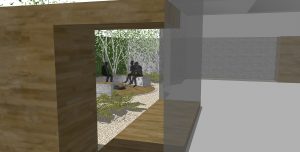
Working on our latest off-grid sustainable project for Elmley Nature Reserve has caused us to flashback to our unusual Tree House Project earlier this year.

We thrive on a project that pushes us beyond convention and our tree house project did just that. The brief was broad; create a versatile, year round summer house within the 19 acre estate. This gave us the scope to choose both a site and style that suited the landscape but was also bold enough to create interest. The tree house was a project which blurred the lines between architecture and landscape architecture with the structure itself being designed in-house as a combination of contemporary vertical lines and more traditional natural materials.

Sustainability was important here with the tree house being constructed from a host of reclaimed, recycled and natural materials as well as being off-grid in nature.

We agreed on a site which nestled the tree house on the trunk of a large oak in a secluded woodland area of the estate. The trunk of the tree was ideally located so that the veranda of the tree house would jut out over the large water body that formed a central feature of the wider landscape.

Never ones to give ourselves an easy time, the site was inaccessible and contained some sensitive ecology on the route up to it therefore all materials had to be carried by hand and assembled on site. The landscape surrounding the tree house itself was sympathetically designed to both enhance the existing woodland features and create framed views out to the wider landscape through the canopy.

The joy of this treehouse is that the location means you can only catch glimpses of it from the surrounding estate. From some aspects, it’s completely hidden and others it hints at something wonderful drawing you in. We have recently been back to see it weathering into the landscape and it is beginning to feel like it has always been there. It is now in regular use as a studio, library, summer house and even an occasionally overnight glamping getaway for kids large and small. We can’t wait to see it change through the seasons.

For more information or photos, see our portfolio page here.

Sound and the Landscape

Sound in the Landscape

Soundscape Ecology

When you begin your training in the realm of design the terms “function and form” are some of the first to be learned and these principals underpin design work across a whole spectrum of industries. We came across a product this week that got us once again considering overtly the balance of these two aspects.

Archittettura Sonora is the brain child of a group of acousticians, engineers, architects and landscape designers who (in their words) wanted to “redesign the reality of space and landscape through an immersive sound experience”.

We’ve talked in previous blogs about the sensory capacity of the landscape to be healing or transformative and sound is no different.

All this talk of sound got us thinking about the concept of “soundscape ecology”. Soundscape ecology is not a new concept but it is becoming increasingly talked about in the industry and there are calls for it to have its own formal branch under the heading of the more traditionally recognised “landscape ecology”. Soundscape ecology in essence is the collection of sounds which emanate from the landscape both biological and man made.

Many of us have stood in the landscape listening to the sound of the wind through the trees on a blustery day, birds twittering in the hedgerows or the waves crashing against rocks on a stormy coastline. There’s no doubt the sound of the natural landscape is important and often emotive. Clients increasingly talk about their gardens or landscape in sensory terms and sound specifically is becoming increasingly synonymous with ideas about well being like mindfulness. So what of the man-made aspect of sound?

Many human-derived sounds in the landscape are by-products of human activity but when it comes to design many of these can also be deliberate. Consider, for example, the increasing number of immersive sound exhibitions popping up across the art world and the positive reaction of art-goers to these.  The impact of sound on the human experience of our environment is increasingly being recognised as not only significant but sometimes profound. So how does that relate to our work as landscape architects?

When designing landscapes our clients often have a wish list which is both aesthetic and functional and it’s our job to merge the two seamlessly. Because of this, when it comes to detailed design, we very often need to design bespoke items because “off-the-shelf” products often seem to solely consider function over form. This approach works well for items like fire tables, garden furniture or water features but some items require greater levels of technical engineering or expertise. Traditionally when it comes to designing in sound, garden designers have looked at hiding speakers in the landscape; nestling them inconspicuously in the undergrowth or placing them high above the eye-line attached to the walls of buildings.

Here at Studio 31 though, a part of our ethos is about uncompromising design and whilst striving to achieve this, occasionally we come across a company like Archittettura Sonora. These guys provide a design solution with a higher functional specification than the average market leader at the same time as considering the speakers themselves as a part of the landscape; a deliberate feature rather than a hidden necessity.

And that for us is where they have hit the nail on the head. Design should be deliberate, uncompromising and immersive, subtle, beautiful and sensory. Sound forms such a huge part of the way we understand the world and if we take a moment to just listen, we might recognise the powerful role sound has to play in design.


Photo by Alphacolor

tree

The second in our monthly professionals series; Carl McClean, Tree Research Ltd

 Carl McClean; Project Manager

This month we are meeting Carl McClean, Project Manager for Tree Research Ltd.

Carl started out life in the landscape industry aged just 16 and whilst working for a landscaping company at home in Ireland, he was well and truly bitten by the industry bug. He went on to study Landscape and Amenity Management and in the subsequently decade has worked in roles across the industry doing everything from training horticultural apprentices on community gardening schemes to managing a multi-million pound redevelopment project as Park Manager for North Tyneside Council. Under Carl’s direction the Park went on to gain successive Green Flag Awards and as if that wasn’t enough, he then also took on managing a 400 acre country park and outdoor education service.

Carl is someone who wants to bring about change and I suppose it was therefore inevitable that having been instrumental in creating an award winning Park and Education service, he was going to hand the reins to someone else whilst he sought out his next challenge.

Carl relocated over 300 miles to find his next role and now works for Tree Research Ltd, an innovative and unparalleled company renowned for sourcing, supplying, planting and aftercare of mature trees and topiary.

True to form, Carl boasts a role where saying “it can’t be done” is rarely an option. He works alongside Charlie Noton and a team of specialists whose knowledge and expertise of trees mean that they can successfully complete projects that other companies simply can’t.

To give you an idea of the kind of work Tree Research do, Carl recently completed a project which entailed manually handling 8 large beech topiary (each around 750kg each) within a walled garden. The lack of access for machinery meant there was no room for error and just to add a little extra pressure, the garden was also open for NGS the following weekend. In a few weeks time Carl will be crane lifting 17 trees over an exclusive property in Bath and the following week landscaping a front garden with a 200 year old Cedar tree in Cardiff. In his words:

“My role is pretty varied – and I like it that way”

Trees play such a big part in the landscape and as such within landscape architecture and it’s clear Carl has an intrinsic understanding of this connection;

“The ability to plan a project from the start and see a tree established immediately is a real thrill. A lot of people have reservations about moving large trees but this sort of practice has been carried out for centuries. Humans have an ability to sculpt the landscape and create beautiful places that work alongside nature. It may not be referred to as fully ‘natural’, but neither is Stone Hedge, or Machhu Pichu, all forms of life change their environment. As long as it is carried out in a sensitive manner then it can be a wonderful thing.”

Carl’s connection to the natural world is more than just a day job, it’s a part of his soul. He is considered in his approach to nature and has an innate understanding of the sensitivities and vulnerabilities of our natural world but with an extraordinary attention to detail and knowledge of the landscape industry.

Here at Studio 31, it’s no secret we have an inherent love of trees and they are a key part of so many of our projects from private tree houses to our country estate work and so the opportunity to interview Carl was a personal treat for us. When we choose consultants or professionals to work with, we look at more than just their job title or credentials, we are looking for their broader understanding of our vision for the project and the client’s aspirations too. We are looking for an attention to detail and ethos similar to our own and Carl certainly embodies that. It’s clear that he doesn’t see his job as just moving trees but thinks of it in terms of design and the broader impact and contribution of that tree or trees to the landscape. He seems to understand the importance of design from a conservation and regeneration perspective as well as for personal and aesthetic pleasure and that broader understanding clearly feeds into the success of his work at Tree Research Ltd.

We will leave the last word on trees to him:

“I can’t image not working in this industry. I have an affinity with the outdoors and a genuine love of being involved in the creation of landscape; not just for visuals, but for people to experience. There is so much that we can’t really write down in terms of the effect different trees have on us as humans – their different characteristics – texture, stature, presence, movement…all of these connect emotionally to those who will allow themselves to experience it.”

There’s not really much more to say than that is there?

Get Diggin’ It: Growing a Community

“A Community Garden with a Difference“

Through our work in landscape architecture, we often get to meet quite extraordinary people and a couple of weeks ago, we met with someone who most definitely fitted this bill. Jenny Lynn is a Director and Founder of brand new not for profit organisation Get Diggin It, which aims to get local communities engaged with growing and eating their own food.

The project has taken inspiration from a number of exceptional places and people from Ron Finley (whose Ted talk we posted here a few months ago) to Kurtis Stone, from the tireless work of organisation Incredible Edible to the Fleet Farming project in the US. Get Diggin It, was born from a simple seed and is growing to be something that could change the way communities view their food.

The basic principle behind the project is to take unkempt or unproductive spaces and transform them into community vegetable gardens but these are more than just your average allotments, they are trans-formative spaces from which to educate and inspire communities about the health, wellbeing and environmental benefits of growing your own food.

Knocked sideways by the statistic that 73% of all our food is supplied by the top 4 supermarkets, Jenny highlighted that with community food production as it stands, we can’t feed ourselves without reliance on these large corporations. Her idea is that every community should be self supporting, that food can be grown locally and eaten locally (and seasonally) and that is better for everyone. It’s cheaper (in fact, it’s free!), it’s healthier, it’s fresher, it supports the local economy and it’s sustainable.

Community Garden

Jenny walked me around one of their gardens and the most striking thing about it was the incredible lack of waste. Not only does nothing go to waste in these spaces but they actually use other people’s waste products to create everything they have. They bring a whole new level to the terms reclaim, reuse, recycle. This entire garden was formed from other people’s “rubbish”. A greenhouse which Jenny described humourously as “a little too effective” was ingeniously fashioned from plastic wrapping donated from a local builders merchant and scraps of wood left abandoned at the side of the road. There were vegetables growing in paint pots, seedlings in mushroom cartons and even bird-scarers made from leftover takeaway boxes. Nothing was “new” and yet everything was thriving.

The team behind ‘Get Diggin’ It’ are innovators, using their expertise and ingenuity to not only create edible gardens but more than that to spread the wider, deeper message of what they do across this community and also far beyond. The model they use is one that can be scaled, it leaves room for adaptation and change to fit the dynamic needs of other communities across the country and so this project is a little like the vegetables it creates, organic.

One question burned in my mind though. When talking to Jenny, it was very clear to see her passion and enthusiasm for this project but it was also obvious that it takes an inordinate amount of her time and energy too and I couldn’t help but wonder “Why? Why did she start this? And why does she give so much of herself to it?  Why does she want to go into schools and educate children about it?” I asked her the question and her response bowled me over, “It’s about being human.” She said.

And she couldn’t be more right. This project brings communities together, it forms friendships, combats loneliness, helps people eat well, teaches people about food and helps communities become self supporting and ultimately more resilient. It’s not just about vegetables, its about people, it is quite literally about being human.

Here at Studio 31, we spend all day every day transforming landscapes, taking a plot of land or earth and creating something new, exciting or innovative. We consider ourselves industry leaders, we watch our carbon footprint and do our best to be conscientious in what we do as a practice but for all our expertise, it’s fairly humbling and also pretty inspiring to see how one organisation, one person really, can use a patch of land no-one wants to quite literally “grow a community”.


Photo by Markus Spiske

Sussex Garden Design

Sussex Garden Design: A Project Update

“A Hidden Gem in Brighton”

We wanted to share a brief update on one of our Sussex garden design projects which is currently onsite being built.  The site itself really harnessed the skills of our design team as it comprised a series of small narrow spaces surrounding the central house. People often think of a garden as a square or rectangle shape at the rear of a property but this home, almost entirely hidden from the road was encased on all sides by seemingly unusable space. This meant the challenge was to maximise the size of the plot whilst also connecting the smaller spaces together.

Our clients themselves had already completely redesigned the interior of the house and wanted a landscape to match their astonishing attention to detail on the inside. They set the bar extremely high and so we set our goal to exceed their expectations.


Sussex Garden Design


Our design, first created a sense of arrival, something that had previously been missing from the site and then looked to create a congruous and cohesive set of spaces which complemented each other rather than felt entirely independent. Our clients really wanted the build of their garden to remain true to the design and were even bold enough to take our advice to change colour of the outside of their home.

Being a small and awkward space initially, it was important the garden really captured both the personalities of its custodians and the spirit of its location. The whole scheme reflects the eccentricities of Brighton culture and the features within the garden spaces themselves also capture the passion of our clients for entertaining. Next on the build list are a custom-made fireplace, new barbeque facilities and best of all, their very own bespoke gin bar. We can’t share too much just yet but the results are looking to be astounding.

Head to our portfolio page to read more…