Kent Landscape Architecture

Project Update: Planning Permission Granted for Kent Landscape Architecture Project

Good News for our Kent Landscape Architecture Project

Planning permission has been granted for our very exciting Kent Landscape Architecture Project. It’s a true gem of a scheme balancing sensitive ecology with hospitality and once again disproving the misconception that all development is environmentally destructive. In this case it actually works to reconnect human and nature. This is one of those projects that really highlights why we love what we do, so we thought we would share a sneak peek of one corner of the landscape design.

For more information and photos, see our portfolio page here.


healthcare

Our monthly professionals series; Louise Knights, Associate at LSI Architects

 Louise Knights; Associate, LSI Architects

This month’s Landscape Professional blog features architect Louise Knights, associate at award winning AJ100 architectural practice and ‘Sunday Times Best Company to work’ for, LSI architects. Louise joined LSI in 2007 and over the last 10 years has worked on a whole range of projects from bespoke residential to sports and leisure but her focus (and passion) for the past 8 years has been on healthcare.

I have worked on new build Palliative Care Centres for patients with life-limiting conditions and their families, hospital projects, creating the Addenbrooke’s Major Trauma Centre and paediatric ward refurbishment projects. I have also been involved in several hospice projects [including] the Arthur Rank Hospice in Cambridge”

It isn’t difficult to see that work on these health -related projects is more than just a job for Louise and she feels deeply both the privilege and reward of her role;

“I am fortunate to be in a position where I can make a difference to people’s lives, I have designed buildings for charities where people have told me they now volunteer more because they love working in the building that I have been involved in designing.”

Louise really sees the holistic nature of designing for healthcare and feels strongly that this begins early in the process of meeting the clients and understanding their needs. This is no easy task when the client for these types of projects often takes many forms.

“…early client engagement is essential to unlocking how the design should evolve. I usually carry out several workshops with different members of the client group as listening to everyone is crucial. This is what I enjoy most about being an architect because getting this early stage right then feeds into the design and as it develops you can see everyone’s ideas, needs and requirements come together. It is rewarding to see everyone taking ownership of what is being created.”

Her holistic view also extends to the consultants she works with and she uses her relationships with them to really get the most from building;

“I have been fortunate to work with several like-minded consultants and contractors that all see the importance in achieving high quality architecture, landscaping and buildings on what is often a very tight budget due to the limitations of Charity funding. Working within constraints often results in creative thinking and working together to provide affordable solutions that don’t compromise the quality of design we are looking to achieve.  It is important to appreciate that the charity funding comes from community donations; funds raised by local schools and sponsored runs, bike rides or other activities. The hard work that goes into getting the money together needs to show in the built projects and cannot be seen to be wasted; every penny counts.”

Specialising in healthcare, Louise also sees the value in the link between building and landscape;

“For me the landscape is just as important as the building and this is especially true of hospice design. it is important to me that every patient has a direct connection to the outside and the landscape becomes part of the bedroom. Just because a patient is bed confined doesn’t mean they don’t want to be outside with the sun on their face, the scent of the planting in the air and the sound of birds around them. With each of the hospices I have been involved in, this importance of the patients being able to be outside has been paramount to the design.

Where possible I like to involve Landscape Architects in the briefing stage of the design. I find their input invaluable in ensuring that we are considering the right approach for the building and landscape connection as early as possible”.

In fact, so passionate is Louise about landscape and getting the right outcome for her clients that when the landscape for the Palliative Care at the James Paget Hospital sadly fell victim to value engineering, she and LSI architects, worked with a local garden centre to get plants donated and several the staff at LSI gave up their weekend to help plant them. When questioned about this, Louise states simply

“It was important that the centre didn’t lose the landscape it needed and deserved”

Hearing this made me wonder whether Louise’s translation of problem to action stemmed from her very applied route into architecture;

“I got involved with the built environment at an early age, my father is a builder and when he built an extension to the family home, I got involved and wanted to learn. I helped with brick laying and went on to spend several weekends helping on different projects he was working on. This kick-started my passion for the built environment and my enjoyment of design at school encouraged me to pursue a career in Architecture.”

Projects Louise has worked on, have won recognition for patient experience and community benefit from recognised industry bodies such as RICS, Building Better Healthcare and CIAT but Louise’s humble response to these accolades is this;

“More importantly my work has improved people’s lives. Because of the buildings and spaces that my team at LSI and I have created, patients, staff, visitors and families have a better experience. The last 8 years of working in healthcare have been truly rewarding”

Being part of the leadership team at LSI, part of her role is to mentor less experienced members of the team and she seems keen to share her knowledge and expertise to inspire the next generation of architects to remain in or join the profession.

“The skills gap is ever growing and we all need to do our bit to show students how rewarding the construction industry can be”

LSI Architects’ philosophy is to create sustainable, innovative, valuable and positive architecture that improves lives, builds communities and enhances society. Louise pretty-well embodies those ideals, so I’d say for these mentees to have Louise as their guide, they are some very lucky future architects indeed.


Den Building and Design

Designing for play, learning from nature and leaving blank space

No matter how much we yearn to stay indoors on a cold winters day, the pull of the great outdoors is always stronger. Being immersed in nature seeps into every part of our lives here at Studio 31 and it’s rare that even a day of work isn’t broken by a windswept walk.

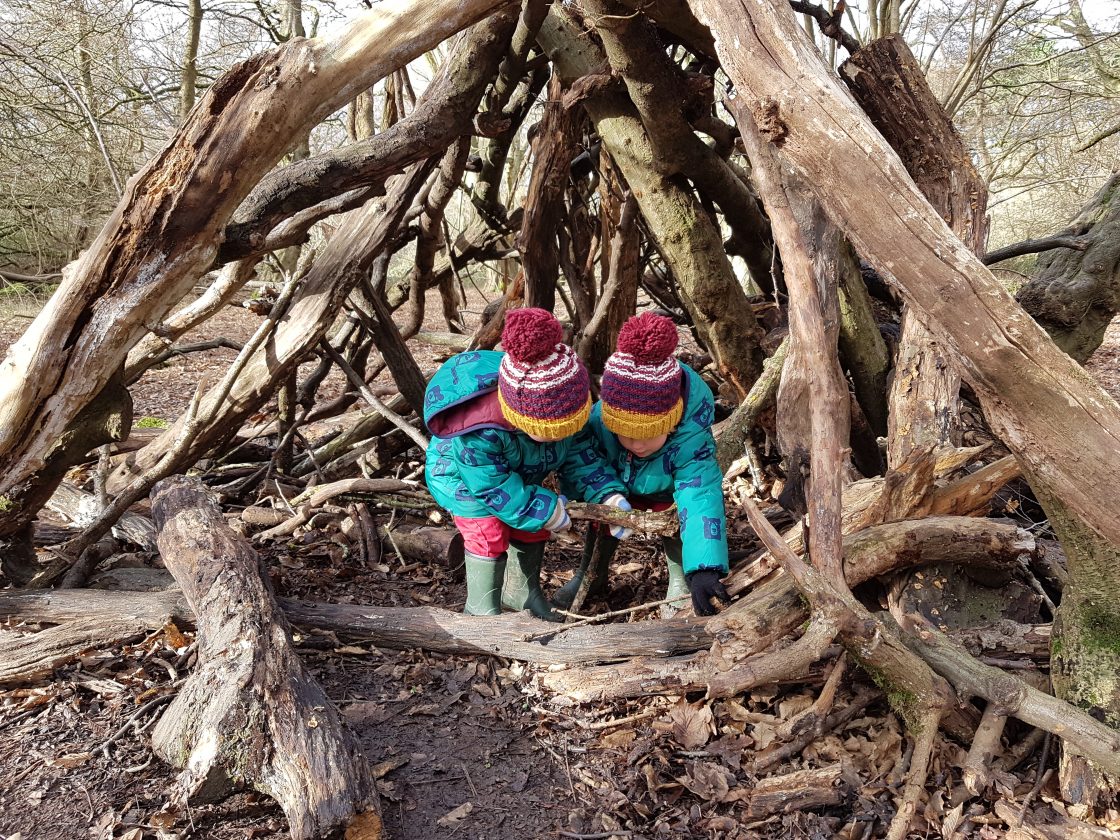
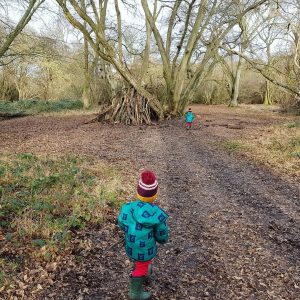
Our working days are broken up with brief interludes describing our outdoor adventures and yesterday we were the recipients of a rare and beautiful show of photographs depicting our director’s children den building.

It was cold on Sunday, bracingly cold, the kind of cold where your fingers ache and your toes yearn for the heat of a log fire, but these kids were out. Deep in one of our ancient woodlands, collecting sticks, branches and leaves, building dens and making mock fires to heat them. I commend him on his parenting of course but that’s not what this blog is about. It’s about design or rather the spaces between it.

You see, very often design is a necessity, it is a way of creating beauty, making use or enhancing function but sometimes design is also about space. It’s about knowing which parts to change and which to keep; which parts perhaps, nature already does better than we do.

We’ve learned this through forestry and woodland management for example. We’ve learned that it’s often better to leave a fallen tree than to remove it and that the power of nature to regenerate when left alone is sometimes more fruitful than intervention.

There are similar schools of thought when it comes to play. In this place of limited phone signal and zero toys, two small children played with just what mother nature had given them. Can we use design to replicate this and create maximum benefits from our urban play environments too?

There is an increasing trend towards natural play in the landscape industry and the art of designing play schemes for children is fast becoming a specialism in itself. We have been following this trend with keen eyes and take inspiration from many of our peers and colleagues in this field when designing our schemes.  Our peers, Green Edge Design in Australia for example, design play and education focussed landscapes for children and advocate the development of their design approach through the feedback of the staff and children who interact with them. A successful approach that really does let the clients lead the way.

Back on this side of the pond, practices such as Davies White led by Landscape Institute’s current president elect Adam White are setting the benchmark for innovative play space design. What we’ve learned here at studio 31, is that it seems the most successful play schemes are the ones that most closely replicate what nature has to offer and give children the freedom to explore, interpret and imagine.

Of course, being in nature isn’t just about play, we’ve talked time and again about the therapeutic benefits of nature on health, wellbeing and happiness and this applies as much to adults as it does to children. That’s why, the great thing about children and den building, is that they require supervision. Meaning that for every child with muddy hands and dirty boots, there is an adult also benefitting from the power of the great outdoors and the great reward that comes from building your very own shelter. For every child that engages with the natural world there are adults who are learning tree species to answer the barrage of questions coming from their offspring and there are adults feeling fresh air in their lungs and the sun on their face too.

Designing for Play

Here at studio 31, we try to have a simple, honest and reflective approach to our designs. We try to learn, not only from our industry but also our subject matter and what we’ve found is that some of our most profound interactions with the natural world are the simplest ones of all. That’s why, when we design, just like illustrations on a page, we try to leave white spaces that nature can fill; like the view between earth forms on our Kent Architecture Project or the use of native planting across many of our schemes.

So, if you’re short of ideas on what to do this week, go on, build a den and whilst you’re at it post a picture and tag us (@designstudio31) in the results. We’d love to keep our creative juices flowing on this one.