Curious

A Curious Design

A Curious Design

Our office is a curious place and as a result of the slightly unusual working environment we have created, we are increasingly finding that we have facilitated a space where really inventive design solutions can flourish. It seems not just design solutions though; design conversations. Of course, we don’t write blogs on all of these; often these conversations are cyclical and thought provoking rather than summative or conclusive but simply having them keeps our brains fresh, our perspectives broad and our opinions challenged.

One such conversation, last week began as idle office chatter about a night spent watching a classic film. This quickly escalated into a conversation about design perspectives.

There is always a lot of attention, in the world of architecture, given to the relationship between one room and another, one space and another and the building and its setting. The placement of walls and windows, furniture and artwork can all contribute to a buildings journey. The corner of a window from behind a wall or something as simple as reflection of light across a corridor, can influence your journey through a space. Small markers, the result of clever design, can reveal a home one pace at a time. The same applies to the connection of building with landscape; time and again the relative merits of narrow, well placed windows versus floor to ceiling glass are debated as the most effective way to connect home to setting.

But what of setting? What of landscape? We posted a couple of weeks ago, a shot from some drone footage of one of our projects under construction. A photograph, taken from the air is somehow like viewing the site on a CAD drawing; seeing the vision and connection of the site from the sky. As amazing as that is, it’s also not often how we experience landscapes. Yes, some do have the topography or character to incorporate aerial views and some like Hortillonnages in France, are even experienced from the water but more often, like a home, landscape is something experienced from the ground.

Just like buildings, landscapes are revealed to us as we wander through them. Like Mary and her secret garden, we have a curiosity. We are drawn to spaces and landscapes where everything isn’t discovered at once. Give a child a square formal garden and they will be drawn to the gate ajar in the 6ft wall and that’s as it should be. Gardens should make us feel curious, we should want to explore them. A garden, like a building can reveal itself plant by plant, step by step. Unlike a house though, gardens are ever changing. Every time you step into a garden it will have changed a little; something new will bloom, something may have donned its autumn coat or lost its winter scarf.

Garden’s just like homes, change with their function. They too may have zones or rooms but these are separated not with walls but with design. This isn’t just one design though, it is many. The design of a garden must account for its changing shape both through the seasons and through the years. It must look through the eyes of a child and perspective of an adult. It many cases, it may even look through the eyes of the fauna who will also call it home. It may be viewed from inside a building or back on itself from a further wild spot and it must carry you from one space to the next, feeling both separate and part of a whole.

The perspective we have on a landscape influences not only the way we interact with it but also the way we feel about it. And not just the way we feel about the landscape itself but also the way we feel within it. Perspective in a design sense then, is crucial but also subjective. It’s true there will be many constants we can design for but in the same breath there will be many ideas which will flex with the site, the client and the brief.

What remains though when every project is stripped away, is curiosity. We should want to explore and engage with our gardens, our landscapes and our homes. Perhaps then we should think of our designs not only as a set of guiding principles, drawings and lines but also as stories. Stories which draw us into them and make us feel curious and are discovered as we move through them. Perhaps Leo’s Buscaglia’s words say it best…

“Life is uncharted territory. It reveals its story one moment at a time.”


Photo by Toa Heftiba

Architecture of Memory

The Architecture of Memory

Fairytales in Architecture

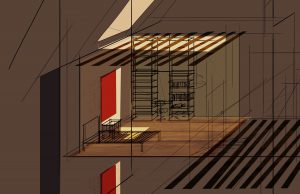
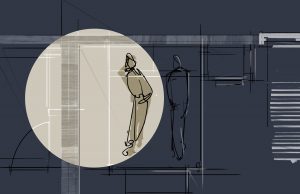
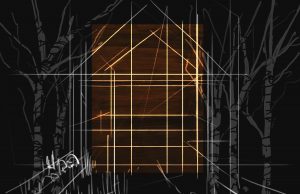
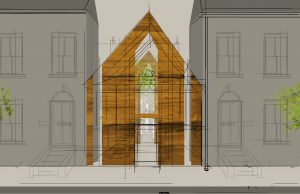
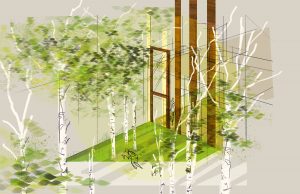
Towards the end of last year, we entered the Blank Space; Fairytales in Architecture competition; a competition which has become synonymous with capturing social and environmental issues in the architectural industry through fiction (If you haven’t seen it, do check it out). What follows is our entry. Often fiction can translate a message in a way that facts simply can’t, so in true Studio 31 style, the concept behind our entry was to try to explore the link between architecture, landscape architecture and health. The story is a brief moment along one man’s journey with dementia and the subtle but significant impact of building and place on his health, well being and memory. Much of our work here at Studio 31 follows a design for health agenda and we are keen advocates that design has a huge role to play in both environmental and health issues. ‘Design for Health’ is a BIG but important topic and what follows is only a drop in the ocean but hopefully it can inspire further change and discussion in the realms of design. The piece was illustrated by talented artist and illustrator Sam Wilson who has a particular affinity with architectural forms and it is with thanks to him that we also share the attached images which can be found in their full form on his website.


The Architecture of Memory

Horace

It’s square, too square, this room with its freckled plastic walls and felted ceiling. The window, bizarre and pointless exhibits the red brick of the building next door. It casts a shadow where light should be.  I stare hard at the eastern wall, hoping somehow that an opening might appear. All buildings should point to the east, my first mentor taught me that. The sun should rise on your face as you leave your house and set on your garden when you return. From that day to this I have never craved the predictable light of a south facing garden.

“You ok Dad?”

A voice winces at me from a curled and uncomfortable slumber. Its owner resides in a blue, tall backed chair; the kind you usually find in hospitals.

I look to her then back to the east. “Wrong room”, I say.

“Dad”, she persists.

“Wrong room”

She stays. I relent. I fumble to pull my socks over my shoes and push past her into the corridor. Her voice rings out behind me and I quicken, slowed only by the relief of the late spring air on my face as I stumble outside. I turn. She has not pursued me. I continue regardless.


Rowan

The sadness is not lost on me. Some call it irony but for me that’s a term reserved for dry humour and here, there is only sadness. He was an architect, an engineer really. The best of his kind now doomed to four intolerable walls and a window that looks onto a fifth.

I suppose the illness grasped him long ago; forgetfulness and occasional eccentricities. But the eye doesn’t see what the mind won’t acknowledge, “Aren’t all architects eccentric?”, that’s what Mum used to say.

Now, I sneak into his room and pretend to be asleep beside him. He tolerates me then and from my position under a cellular blanket I listen. Mostly inane ramblings, sometimes architectural critiques but largely he is just incoherent. Never the less, it gives me comfort to hear his voice; soft and undulating as it used to be.

Sometimes I build the courage to engage him but mostly now he banishes me from his room with varying degrees of ferocity. Today was one such day. I didn’t chase him, I hadn’t the strength. The tears were flooding my cheeks so hard they melted my knees. It wasn’t until later when I had retreated back under the blanket, that a nurse raised his absence. I wasn’t alarmed. Despite the uncertainties of dementia, we were fortunate that Dad’s escape attempts had always led him to the same place. I knew where he would be. 


Horace

I plunged my hands into the soil; warm and dense. A gardener’s work is never done. I plucked purposefully at the stray green attempting to strangle the alliums and strained my head towards the house.

Now this was a building! Oak timbers stretching skywards and framing generous windows. Windows that were flanked by birch, ash and aspen. The trees themselves casting swaying shadows across the timber floors inside. It was compact but not small, unassuming yet captivating. Light poured into its form and the building breathed. Life ran through it as it had once run through the veins of the trees which formed its bones. Here, I could breathe too.


Rowan

It was a plain street. Ordinary houses all in a line; their monotony broken only by occasional street trees cracking the pavement. Ordinary houses all, except one. ‘A triumph’ they called it, ‘ahead of its time’. Now here I was ahead of mine… ahead of his.

I held my breath and leaned hard against the side gate. At this distance he may have been mistaken for a conscientious gardener and though I knew that his fingers were not green, I wanted to hold that image just a little longer.

He noticed me, which was, perhaps, a blessing for the Stipa he was plucking relentlessly from the ground. I smiled. He didn’t.

He rose and walked to the building hailing its many virtues as he went. Ever the architect, even now. It comforted me that he retained this part of himself when so much else was lost.

In his fervour his arms flailed and his socks, straining over the outside of his shoes, flapped muddying his camel trousers. He looked tragically comical, like some enthusiastic children’s entertainer.

He stopped inches from me and with his next words broke through my thoughts…

“Aggy. Yes, my Aggy would dream of a house like this.” He paused “Aggy?”.

His eyes caught a glimpse of mine; emerald like hers before me. His face searched mine and a light flickered within him. I waited, I hoped but he didn’t find her, he didn’t find me. The flame extinguished before it could grasp the wick and my heart fell, crushed under the weight of it all.

He ran his hand along the cladding, the rough timbers catching his skin softly as he went. The tall grasses rustled against his outstretched arm and without turning he asked a question, “Tell me. What kind of a man built a house like this?”

My eyes stung with the tears fighting to escape them and my knees faltered. I placed my hand against the oak and just for a moment, we were silent. Our fingertips connected through the veins of the wood beneath them. It was the closest I had come to touching him for a long time.

His question clung to me like a fog; humid and suffocating.  “What kind of a man built a house like this?”

I pushed the lump in my throat down and finally a voice found its way out,

“You did, Dad. You did”.


Architecture of Memory


Written by Katie Flaxman.

Illustration by Sam Wilson.