
Valuing Nature and Landscape
The link between nature and health dates back to the middle ages. References to this link can be found in ancient texts and there now is increasing research beginning to evidence these age-old ideas. This research is importantly formalising something most people already intrinsically know…nature is good for us. We see the beauty in a sunset, we feel our breath return when we walk an untrodden path and we feel stillness descend as we wander in the shade of a forest. We know our bodies were built for the outdoors and we know it makes us feel well in a way few other things do. Why is it then that we place so little value on landscape? How have we come to be so disconnected from nature that we view it as a luxury item; televisions are essential, but plants are a “nice to have”? We need to find a way back from here and it is my belief that ‘health design’ can be part of the answer.
A big barrier to ‘health design’ in relation to landscape is access to information; being able to give clients the knowledge with which to make informed choices. At Studio 31, we have found that people respond positively to evidence. They understand and trust in science and when landscape professionals are able provide solid rationale for design decisions, this facilitates both psychological and financial investment in landscape. This in turn has a ripple effect of creating healthier spaces for people and planet in the longer term.
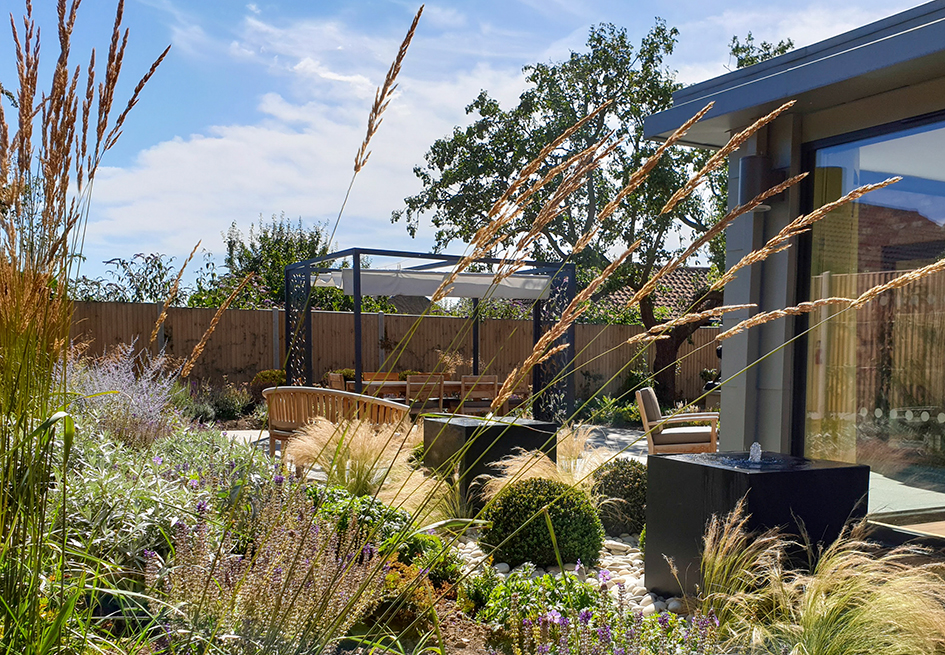
An example of this is one of our projects, The Pear Tree Centre which was commissioned to support people diagnosed with a life changing illness. As a charity, the budget for both the building and ongoing running costs was fundraised, in its entirety, by a passionate collective of people. The result of this could have been (as is the case with many projects) that the landscape elements were the first to be value engineered. However, the charity saw nature connection as integral to the project’s success and this meant our involvement was commissioned at the project’s inception, despite, at that point, having limited budget allocated to the garden space.
Being involved at this early stage gave us an opportunity to explore the health needs of the people who would be using the centre and subsequently to evidence the health benefits of investment in the landscape for the service users and staff. What followed were presentations to both the trustees and the wider public, discussing the concepts which underpinned our design and how the garden space could support the centre’s aims and objectives in relation to health.
The trustees’ passions for both nature and health were evident, and they launched a separate fundraising campaign specifically aimed at the outdoor space, investing significant resources in their desire to achieve a health focused garden.
We were fortunate to work with such an open minded and forward-thinking panel of trustees to create a space which is demonstrating positive impacts on wellbeing of both centre users and staff. However, ‘health design’ is not yet a conventional starting point for design, even within health projects. To invest in landscape in this way, still feels like ‘thinking outside the box’. We need to move nature from a luxury item to an essential one and responsibility for doing this is on us as professionals to know and understand the research which underpins ‘health design’. Only then can we begin to translate this into fruitful conversations with clients and together begin creating truly healthy landscapes.
Head here to take a look at our Pear Tree Centre Project
_______________________________________
This article can also be read in Prolandscaper Magazine.