Elmley Nature Reserve
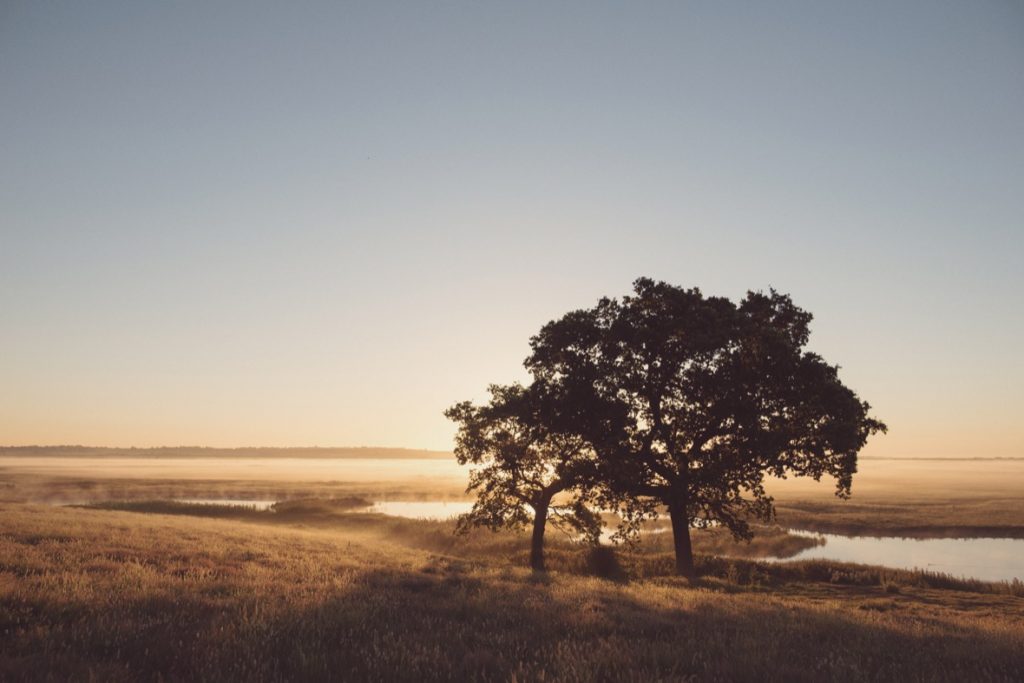
Back in February, the directors here at Studio 31 took a trip to Elmley National Nature Reserve on the Isle of Sheppey, a place with sustainability at it’s heart. The initial and perhaps most notable thing about Elmley is that it is surprising. It sits in powerful and remarkable contrast to the rest of the much more industrial Isle of Sheppey. Turning off the main roads and into the reserve, you amble down a long and winding driveway being pulled deeper and deeper under its spell. The reserve stretches out in front of you, a strangely beautiful landscape. Not the rolling hills of Wales, not the traditional agricultural fields we see so often across the British countryside but something which seems less touched by the hands of man. Something perhaps best described by the Elmley team themselves:
“A vast wilderness. Spectacular landscape, soul stirring skies and breath-taking wildlife”
That’s not to say it isn’t of course (touched by the hands of man). Elmley is a 3200 acre estate. It is a working family farm, a nature reserve, a site of special scientific interest, an internationally important site for conservation, a special protected area for birds and a Ramsar site (wetland of world importance). It makes sense then that in order to keep the reserve thriving, it takes a phenomenal amount of land management. Moving away from the statistics it’s easy to see from the sheer abundance of wildlife that a great deal of effort has gone into maintaining this astonishing place. Murmurations and flocks of birds fill the sky almost every moment of every day. We saw barn owls, a stoat and made good friends with a resident robin. Not to mention, abundant hares and of course the livestock that graze the land.
The history of Elmley is almost as interesting as the place itself; citing a colourful array of events including a king disguised as a Jesuit priest, the smallest school in England and a devastating flood in 1953. It was in the 1970s though that the family who still run Elmley today took on a major part of the tenancy from Oxford University (alongside the RSPB who started a wetland reserve). In 1986 Oxford University who had owned Elmley for 150 years, invited the family to take on the ownership and this resulted in significant adaptation of the farming systems and land management for wetland birds and livestock grazing seen today. In 1992 the restoration had been so successful that Elmley became a National Nature Reserve and is still to this day, the only NNR owned and managed by a farming family.
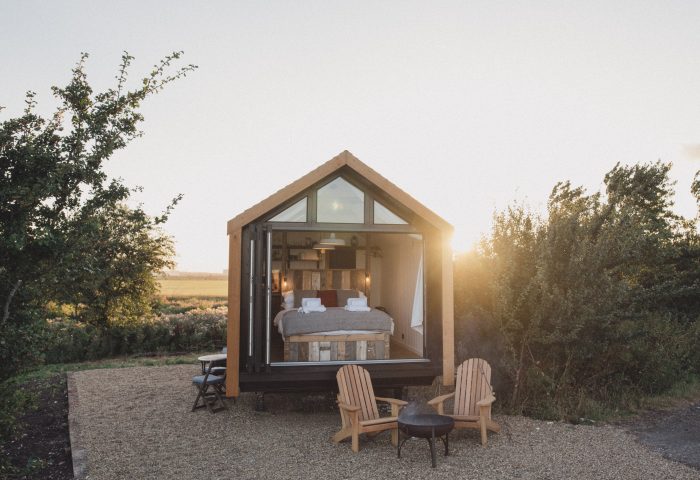
It is this family who makes Elmley so special. Their hard work and dedication to both sustainability and conservation is something to aspire to. Elmley is off-grid. Yes, an OFF-GRID FARM, powered by a solar array and some pretty snazzy batteries. Its huts are handcrafted by Plankbridge Master Hut Makers and use British natural materials and eco friendly insulation. We stayed in one such hut, the Saltbox, which testifies to the case that sustainability does not mean architectural compromise. This structure is an architectural triumph.
Food is locally sourced. The toiletries are Green and Spring which means they are made from 100% natural botanical materials and ethically sourced ingredients. Within the huts you find English oak, Romney wool throws and breakfast is delivered to your door in a vintage teapot and reusable glass containers. There is detail here and a refusal to compromise on ethics and that’s what struck most.
It struck us that sustainability isn’t always about the big things; it’s about a thousand small things. It’s about doing more when it’s easier to do less, the next big idea and incredible partnerships with other people who care too. It’s about going left instead of right and it’s about caring enough to find the information to make informed choices. Or at least that’s what we try to do here at Studio 31.
There is no end to the energy that the Elmley crew have, with more hut building commissioned and a plan to take on the mammoth task of restoring the beautiful but derelict original farmhouse to preserve it for future generations; these guys like their challenges big but my goodness do they smash them.
Landscape architecture is a far cry from running a nature reserve but there are parallels here too and the lessons we have learned from visiting have cemented the idea that we are making right decisions and that the combination of small details and bold ideas can create something not only beautiful but powerful too.
Thanks for having us Elmley, see you in September.
Photos courtesy of the very talented photographers…
Rebecca Douglas (saltbox)
Robert Canis (marshes)