Spring Update

Spring Office Update: Planning Permission, Student Exhibitions and Office Allotments.

A Spring Office Update for Studio 31 

The beasts from the east have, for a moment, relented and with the clocks having changed, we have decided it is officially Spring (whether or not the weather this weekend agrees). Here are just a few of the things we are working on, that are really reinforcing why we love what we do.

We are preparing to submit for planning permission on some particularly breath-taking projects at the moment. This means we can’t say too much but they include a brand-new hospice and a contemporary residential project with a difference.

The hospice will provide much needed services for people living with a life limiting illnesses and the landscape element is an essential part of their holistic approach to care. The gardens and wider landscape areas will be driven by existing and emerging research linking landscape to health and this approach aims to promote wellbeing as well as aesthetic value.

The landscape design for the contemporary residential project makes the most of the countryside views stretching all the way to the shard in central London. It has more than a few exciting features, not least a remarkable subterranean swimming pool and this is one we can’t wait to share with you.

The students at Writtle University College are hunkering down in preparation for their final year exhibition under the watchful tutorship of one of our directors Edward. It’s looking to be an exhibition worth visiting so if you’re looking to recruit a new designer or just want to see what the landscape designers of the future are producing, why not pop along from 17th to 20th May.

We are busily planning our stand for the Grand Designs Exhibiton in May this year. Watch this space for exciting news on this including how to book a free consultation with us.

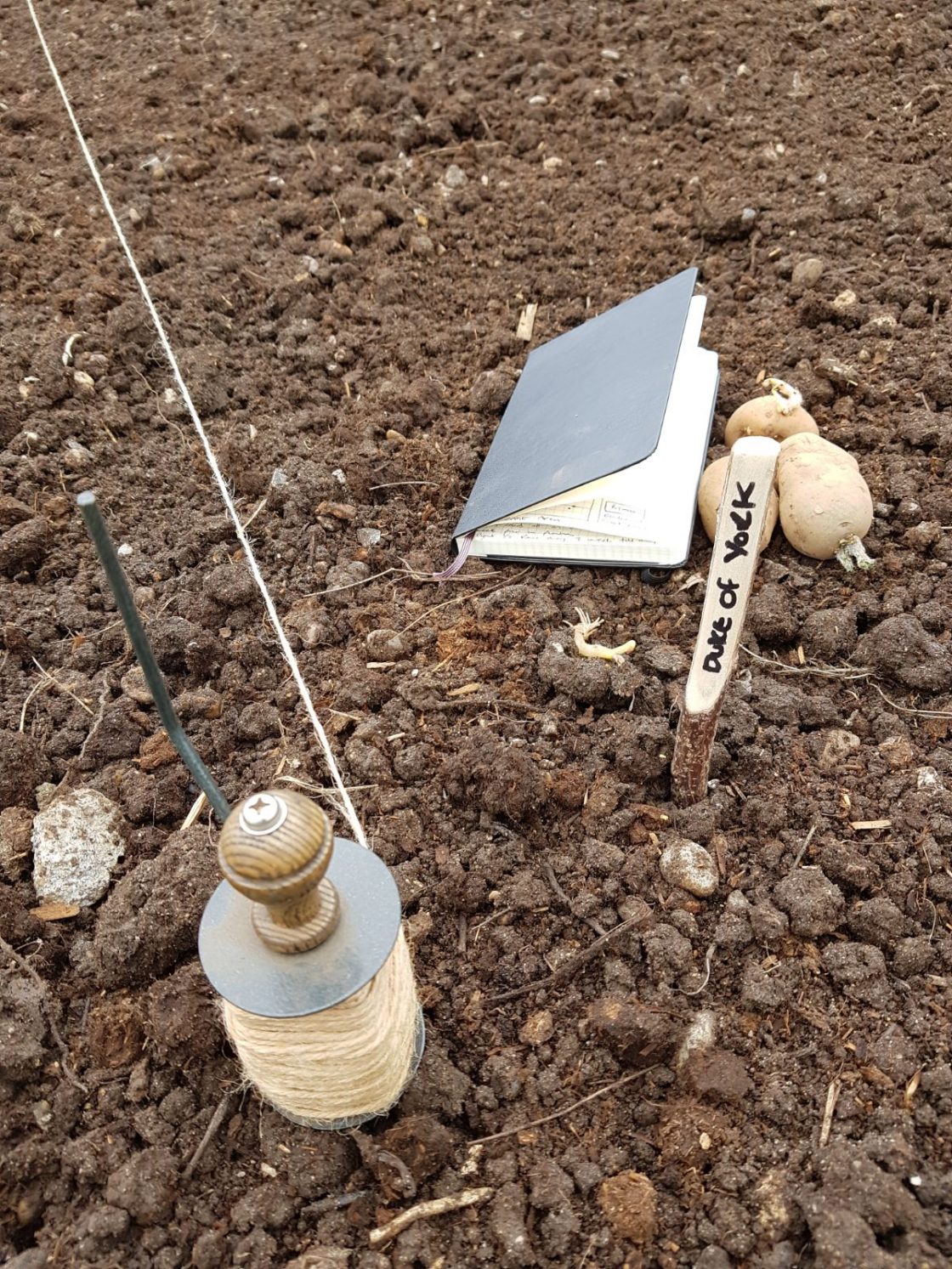
Equally importantly, we have been busy at the office allotment and so determined are we to get something growing after the late winter snow, we have decided to plant our spring potatoes a little later than planned. With the weather reducing our green fingers to just “forcing the rhubarb” and propagating office plants, it’s feeling urgent that we take our gardening efforts to the allotment before we go from studio to jungle.

Wishing one and all a great Easter weekend and do watch for more updates as we lead into April.

Grand Designs Live

Studio 31 at Grand Designs Live 2018

Studio 31 are heading to Grand Designs Live 2018

Studio 31 are excited to announce that we will be exhibiting at Grand Designs Live later this spring. Whether you have a new project in the pipeline, want to breathe life back into your existing garden or just want to get to know more about us and meet the team, come and see us at the Excel Centre from 5th-13th May.

More exciting announcements are on their way in relation to Grand Designs (so watch this space) but until then feel free to get in touch to book a consultation.


Our new monthly landscape research blog; Nature connection, shaping the design of our cities

 Landscape Research; The link between availability of nature people’s interaction with it.

Those that know Studio 31 will be all too aware of our passion for the connection between nature and wellbeing. It is of course, a subject hot on the government agenda right now but for us it stems right back to our very first project and even beyond that. One of our directors, Katie, is not, as you may assume, a landscape architect, but instead has a background working and lecturing in mental health and is passionate about the importance of nurturing health and wellbeing through every aspect of our work at Studio 31. In becoming a director of Studio 31, her worlds collided, and she was finally set loose on interweaving her two great passions for wellness and for landscape. She is fuelling our fire to get people to understand that landscape is more than just aesthetic, it’s a necessary and intrinsic part of feeling well and being well.

So, she’s decided to share some of her knowledge and understanding on the subject through a monthly blog which discusses one piece of research linking health or wellbeing to landscape and the natural world. Read on for month one.


Landscape Research

Research. Love it or loathe it, it’s essential. It helps us to understand the world around us, drives medical advances, keeps our food safe and informs almost every part of our lives. Having said that, if you aren’t an academic (or sometimes even if you are), navigating research can be a time consuming, confusing and at times even baffling pastime. That said, it is also necessary, informative and interesting, so here goes my attempt at sharing with you some of the papers I have come across in my search for the latest theory that relates to landscape and health. I will, where possible, attempt relate it back projects or concepts in the public eye and of course to our work as a landscape architecture practice but sometimes, I may just link to our global experiences of being human. My aim is to select just one paper to summarise in each blog so for more detailed references and sourcing you will need to head to that paper directly. Where it’s possible to get free access, I’ll try to give a link and where it isn’t ill just give you all the information you need to find it and borrow/buy it elsewhere.

Do remember also that these blogs are an interweave of both my and the papers ideas. In many cases, they are my attempt to apply theory to practice and in some purely my opinion. Please do refer to the paper itself for clarity.


This month’s paper is entitled:

“Variation in experiences of nature across gradients of tree cover in compact and sprawling cities” by D.F. Shanahan et al. It is a 2017 paper published in Landscape and Urban Planning Journal. (157 (2017) 231-238).

Nearly “70% of the global population is predicted to live in cities by 2050” and as such there is growing concern that urbanisation is driving a disconnect between people and nature. Why is this important? Because the there is a growing body of evidence that interactions with nature have a “positive impact on physical, psychological and social wellbeing outcomes”.

This disconnect is thought to be two-fold; firstly, due to the reduction in “quality or quantity of nature in cities” and secondly related to the changes in “human behaviour linked with urban life-styles”. In short, there is less nature in cities and what is there either doesn’t appeal to us or our lifestyles don’t lend themselves to connecting with it.

There is some research available on the former which looks at a range of things like biodiversity and city design. What’s interesting though, is that very little research has been conducted into the behavioural component of “the extinction of experience with nature”. So, in short that’s what this paper is trying to find out. “How does the frequency or duration of experiences with nature vary with variation and availability of nature? Does this differ for cities with sprawling and compact designs?”

When exploring this behavioural component there are of course many hypothesise as to what could be driving the reduction of human experience with nature but much of this evidence conflicts. There are papers for example, which as you might expect, cite “spending more time indoors, “availability of nature” and engaging in “non-nature based recreational activities” as factors in the reduction of connection with nature. However, there is competing evidence which suggests that, in fact, as nature becomes less available, people actively seek it out (perhaps motivated by wellbeing benefits). In truth there are likely to be a whole host of “complex and interacting factors” here but, what’s important is this; If we can understand how and why people engage (or don’t) with nature in cities and whether they alter their behaviour based on its availability, we can then consider this in how our cities are designed.

Consider here the national park city campaign; the primary objective is to help urban populations to engage with nature. The whole scheme aims to drive connection so the many and varied proposals in relation to how to progress this revolutionary idea need to connect directly with the users themselves. As designers, we need to know what drives people’s motivations before we can design to help them connect. The team at NPC really seem to understand that and their community driven initiatives are testament to this.

This paper is also hinting that the reasons for connecting people and nature extend beyond wellbeing and into wider conservation and environmental issues. “People’s exposure to nature, may also affect their attitudes and behaviours towards nature itself”. “How can people value what they do not experience or understand?”

I recommend reading the detail of the results of this paper as there were interesting links between the type of nature environment (private garden or public green space) people engaged with and the type of city they lived in (sprawling or compact). But in the interests of keeping things simple, this paper showed that people’s tendency to engage with nature was lower in neighbourhoods with poorer physical availability of tree cover” (tree cover was used for many good reasons as the measure of nature availability) “Given the range of health and wellbeing benefits people can gain from living in nature, this [difference in level of engagement] could lead to long term health inequalities”. When considering health and wellbeing benefits here, the paper includes both “passive pathways such as temperature regulation and pollution reduction and benefits derived from direct interactions with nature e.g. reduced stress and improved cognitive function.”

What we learned in this paper was that despite having one sub-tropical area of study and one UK based, people accessed their gardens in a very similar way. There were a similar number of households in both types of city which actually had gardens and though the compact city gardens were smaller (and substantially less balmy), they were still used. This suggests that one way compact city design could maintain access to nature is through use of private gardens because even small ones are important in enabling interactions with nature.

What is unclear from the paper though, is whether a person’s connection to nature is shaped by the environment they live in or whether they move to a neighbourhood which reflects that trait. There are some studies which conclude that nature present within a neighbourhood creates an environment more conducive to spending time outdoors but other studies which now show that simply having green space available within a neighbourhood does not guarantee its use.

Interesting then that this paper concludes with a recommendation that “provision of tree cover should continue to be a key objective in city planning to ensure people continue to access nature”. It goes without saying that this should be high on the agenda, however I would say the ideas here, go well beyond provision of tree cover. The authors are talking about the fact that proximity to nature isn’t enough. We need to look at people’s “nature relatedness”; what drives this and where it comes from because the two things work in harmony.

One suggestion in the paper cites some correlation between experiences of nature as a child with environmental career pathways in adulthood. Just take a look at our landscape professionals blog; every single person built a love of nature as a child, every person in our office did, all our landscape friends have and heck, Peter Donegan of the Sod Show grew plants under his bed when he was kid.  Anecdotal evidence maybe, but look at the passions and enthusiasm of these people now.

Landscape architects then, architects and city builders, should we, in this case, also be considering designing cities for children? Could our designs now, shape their connection with nature well into the future? And thus, shape not only their wellbeing; their happiness but also their propensity to conserve nature beyond our time.

Landscape architects (and indeed architects) have a more difficult job then than just planting trees (though of course this is one important aspect). Design needs to be more than just available green space. It needs to be nature that drives connection. There needs to be strategy for not only the availability of nature itself but the quality and accessibility of this. Recognition should be given for the importance of education and the creation of opportunities for people to engage with nature. This might be nature that is already there or design which considers how people will use any future nature-based landscapes.

The type of research in this paper takes the ego away from designers and has the potential to put the design of cities back into the hands of the people they are designed for. “The maintenance and availability of nature close to home is a critical step to protect people’s experiences of nature and their desire to seek out those experiences.”

Read the paper here.


Photo by furkanvari


Terraced Garden Design Essex

Project Update: Planning Permission Granted

Great News for our Terraced Garden Design Project

Planning permission has been granted for this extensive property renovation in Essex. Working in collaboration with Clear Architects,  we have been commissioned to design a landscape which complements their bold, contemporary design whilst still maintaining the existing character of the site. The combination of complex topography and interesting architectural features such as subterranean swimming pool have made for an exceptional design canvas and we look forward to seeing the landscape come to life in the next stages of the project.

For more information and photos, see our portfolio page here.