Ecology

Design Through Ecology

What if instead of “mitigating” we actually “enhanced” ecology? 

Ecology is defined as the ‘interrelationship of organisms and their environments’. We, by definition as designers, change environments and so it follows that each site we design changes the ecology therein. The word “interrelationship” is also familiar to us. Our studio is founded on relationships which remind us of our connection to all things; The strong, synergetic and sometimes unusual relationships we have with professionals and also the deeply rooted relationships we have with the natural world.

Ecology has always driven our process. It is an integral part of our site analysis and our historic work with ecologists has informed both our design approach and the overall design outcome for our schemes. The trouble is though, that not all projects require ecological input. Landscape architects and garden designers themselves aren’t obligated to consider the ecological value of a site (unless planning or legislation requires them to do so). Because of this, many projects miss out on valuable environmental input.

We believe, that much like a landscape professional should be appointed where a development has an impact on an external space, so too should an ecologist. We believe it is possible to involve ecologists on all projects and the value of doing this to the client, natural environment and to design outcomes could be immense.

Ecologist’s roles are often hamstrung. Reports as part of planning permission often consist of terrestrial and/or aquatic surveys alongside suggestions for mitigating measures. What if, instead of ‘mitigating’ we allowed ecologists to ‘enhance’? Instead of ‘not making worse’, we actually ‘improved’? What if, instead of generic biodiversity improvements which might meet the standardised requirements of biodiversity net gain, the measures taken were site specific and individual?

We have been taking this approach informally for a few years now but as part of our ongoing commitment to the earth, we have forged a partnership with an ecological consultant who now forms part of our Studio 31 team. He is a guide and a compass and is bringing a new layer of knowledge, experience and expertise to our projects.

We are collaborating on the development of an internal standardised assessment of habitat, biodiversity and other ecological aspects. We hope that this can be used to measure both the baseline and enhancements on our projects. We are also rolling this retrospectively across our previous projects to help us ascertain the benefit or learning in terms of our prior informal or outsourced ecological input.

We are using this collaboration to further develop our core ecological philosophy and translate that into design process. These kinds of relationships have previously been compartmentalised and for many professionals their contact with an ecologist on a given project may be paper based only. We are championing, as advocates of ecological design have done for many years, a more holistic and interwoven approach.

The benefits to us as a design practice and to planet earth are obvious but there are benefits from an ecologist perspective also. To gain deeper insight into design concepts and philosophies for a particular project allows the development of an ecological approach in achieving those. Ecologists in this way begin to have real influence and ownership over the design and the ecological outcome of a place.

Relationships are all about how you view them. Landscape and ecology can be tick boxes or hoops to jump through or they can be key and driving factors in the creation of a positive relationship to a site. To have the knowledge and experience of an ecologist on hand is to sidestep the need for client or legislative requirement for this but instead to be led by the natural environment we are designing. It is, we believe, how all projects should be approached and we hope through our learning we can encourage other professionals to begin to value ecology in a similar way.

Image Rebecca Douglas Photography

_______________________________________

This article can also be read in Prolandscaper Magazine.
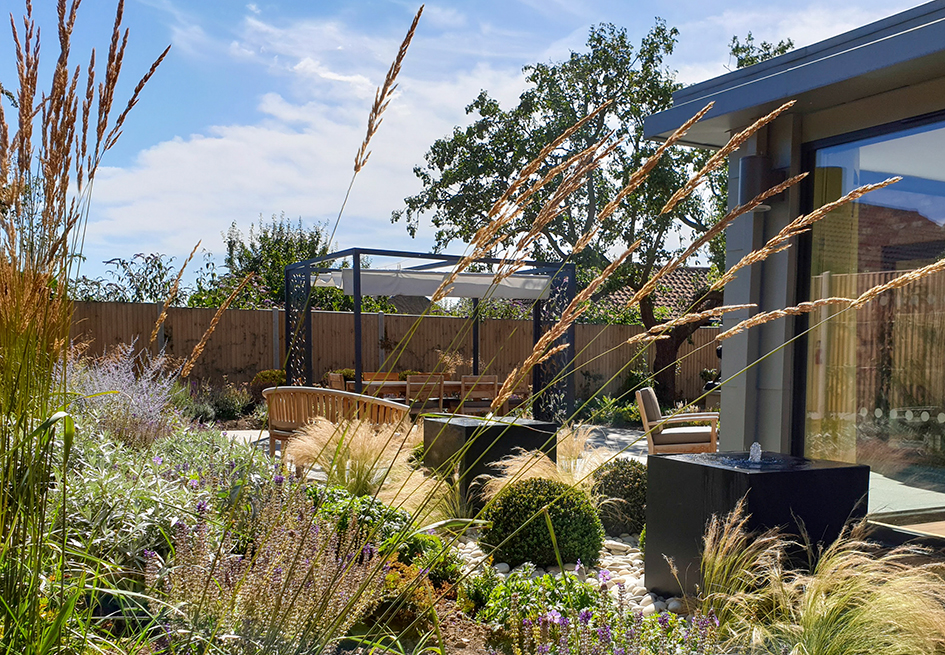
The Pear Tree Centre

Health Design; Valuing Nature and Landscape

Valuing Nature and Landscape

The link between nature and health dates back to the middle ages.  References to this link can be found in ancient texts and there now is increasing research beginning to evidence these age-old ideas. This research is importantly formalising something most people already intrinsically know…nature is good for us. We see the beauty in a sunset, we feel our breath return when we walk an untrodden path and we feel stillness descend as we wander in the shade of a forest. We know our bodies were built for the outdoors and we know it makes us feel well in a way few other things do. Why is it then that we place so little value on landscape? How have we come to be so disconnected from nature that we view it as a luxury item; televisions are essential, but plants are a “nice to have”? We need to find a way back from here and it is my belief that ‘health design’ can be part of the answer.

A big barrier to ‘health design’ in relation to landscape is access to information; being able to give clients the knowledge with which to make informed choices. At Studio 31, we have found that people respond positively to evidence. They understand and trust in science and when landscape professionals are able provide solid rationale for design decisions, this facilitates both psychological and financial investment in landscape. This in turn has a ripple effect of creating healthier spaces for people and planet in the longer term.

An example of this is one of our projects, The Pear Tree Centre which was commissioned to support people diagnosed with a life changing illness. As a charity, the budget for both the building and ongoing running costs was fundraised, in its entirety, by a passionate collective of people. The result of this could have been (as is the case with many projects) that the landscape elements were the first to be value engineered. However, the charity saw nature connection as integral to the project’s success and this meant our involvement was commissioned at the project’s inception, despite, at that point, having limited budget allocated to the garden space.

Being involved at this early stage gave us an opportunity to explore the health needs of the people who would be using the centre and subsequently to evidence the health benefits of investment in the landscape for the service users and staff. What followed were presentations to both the trustees and the wider public, discussing the concepts which underpinned our design and how the garden space could support the centre’s aims and objectives in relation to health.

The trustees’ passions for both nature and health were evident, and they launched a separate fundraising campaign specifically aimed at the outdoor space, investing significant resources in their desire to achieve a health focused garden.

We were fortunate to work with such an open minded and forward-thinking panel of trustees to create a space which is demonstrating positive impacts on wellbeing of both centre users and staff. However, ‘health design’ is not yet a conventional starting point for design, even within health projects. To invest in landscape in this way, still feels like ‘thinking outside the box’. We need to move nature from a luxury item to an essential one and responsibility for doing this is on us as professionals to know and understand the research which underpins ‘health design’.  Only then can we begin to translate this into fruitful conversations with clients and together begin creating truly healthy landscapes.


Head here to take a look at our Pear Tree Centre Project

_______________________________________

This article can also be read in Prolandscaper Magazine.

Doing less to do more

What is good design? 

What is design? What is good design? The answers are many and varied but the core of people’s responses is generally “something”. Design means doing something rather than doing nothing.

In a world of social media where months or years’ worth of work is scrutinised through the lens of a single image or caption, we feel pressure to be bolder, bigger and better than the competition. To stand out with a breath-taking concept that ‘wows’ our audience.

I wonder though, is this where perhaps, we are going wrong?

When did doing more become good design? And could doing less, perhaps be a more sustainable approach to our landscapes?

Our starting point for projects at Studio 31 isn’t ‘What can we do?’ It is ‘What do we already have?’ We look at a site and assess its ecology, biodiversity and nature value and think ‘What can we keep?’ and ‘What can we enhance?’

We recently submitted a paragraph 80 home for planning which incorporates no formal gardens at all. The natural ecology of the site comes right up to the house. Animals will graze up to the windows. The land will be managed using regenerative land management practices right up to the envelope of the dwelling. Landscape changes have been minimal and where a change has been made, it’s been carefully considered to enhance the existing ecology and increase biodiversity. The design here is in the land management which will enhance this site irrevocably over decades.

What does it look like on an Instagram photo? Almost as if we have done nothing at all. In reality the time spent designing that landscape far exceeds many other projects. It incorporates hours and hours of careful research, ecological reports, soil testing, design and management planning. We don’t put the before photos on our websites, people don’t see the habitat creation or increases in invertebrate life, bird species or wildflowers. It’s hard to show the value of this work in a single image.

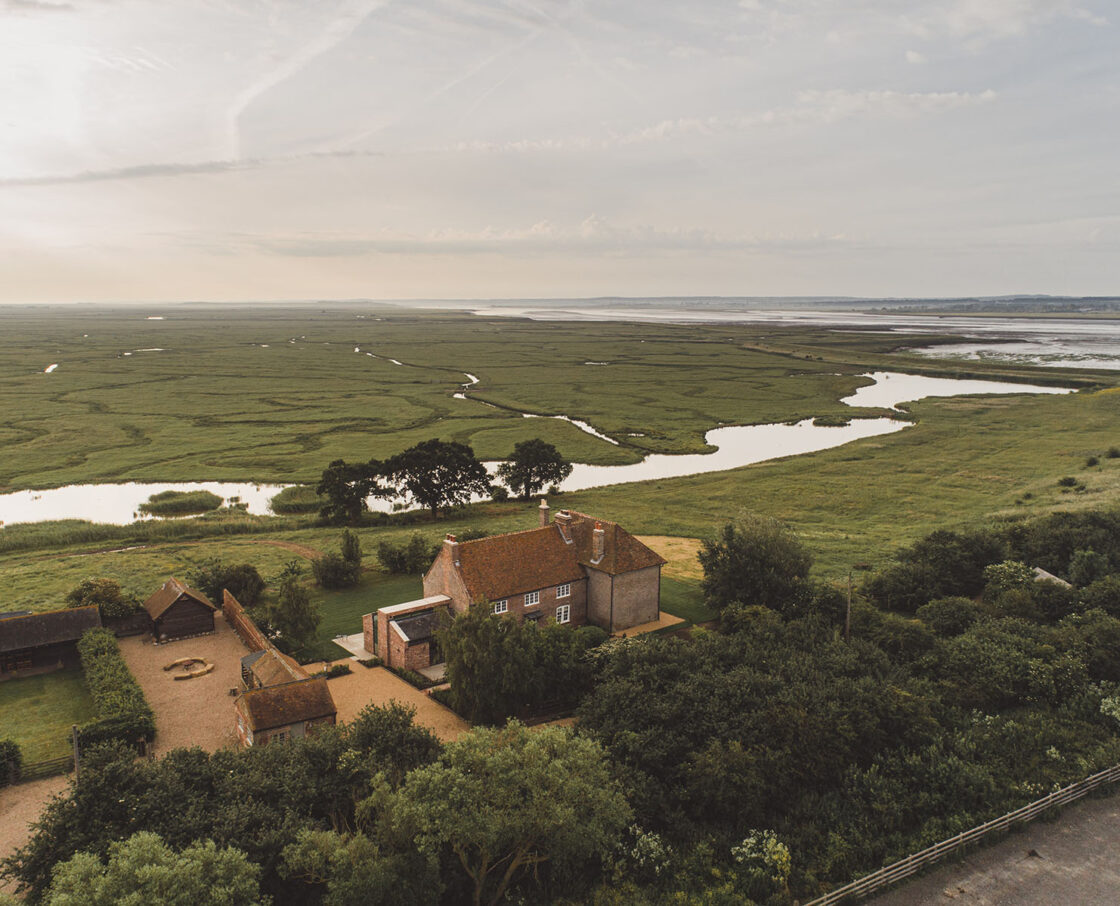
We designed a garden space on a National Nature Reserve. Again, choosing light touch. Choosing plants which reflect the species on the wider reserve and keeping terraces and hard landscape spaces as small as possible. Giving over the site as far as possible to the nature which inhabits the wider reserve and allowing the water which makes that site what it is, to drain through the ground as it should. We allowed the views here to speak for themselves and kept new materials minimal and local. Can we take a single image of its simple, important and nature-led beauty? Not easily.

Nature doesn’t need our egos; it needs our hearts. Client’s don’t always need topiary and expansive terraces, they need thick-legged flower beetles, marbled white butterflies, goldfinches and snakes head fritillaries. We, as professionals, don’t always need to seek to do more, we need to consider quiet, gentle conversations which encourage clients to trust us to do more by doing less. And our Instagram feeds? Well, it’s those that need to be braver, bolder and better in order to tell a different story.

Take a look at a video of our nature reserve design here.


Image Rebecca Douglas Photography

_______________________________________

This article can also be read in Prolandscaper Magazine.
New Year

A New Year in Nature

Reflections on the year that has been.

It’s January 2022. We made it…You made it.

The past 2 years were, for many, a truly tumultuous time full of uncertainty, isolation and never before navigated challenges. There is, therefore, necessity to take a breath, acknowledge the turning of a page and what it took for many of us to get here. 2022 is, as yet, unwritten and it is my wish that, at least that in some small way, it will be a quieter story and a gentler one. Perhaps that was the purpose of 2021; to draw us back to ourselves, remind us of the simplicity of our basic needs and the needs of the world around us. The necessity for connection, warmth, empathy, gentleness and perhaps most pertinent of all, to remind us of the inextricable value of our health.

The media attention has felt heavy but, the past 2 years have also seen a huge shift in people’s appreciation for the outdoors and the mental and physical relief nature has brought during an extraordinarily difficult time. This shift to connecting with nature echoes our studio ethos and the responsibility design has to meet the health and environmental needs of the end user.

From a healthcare perspective, more and more services are beginning to recognise the intrinsic link between mental and physical health and design consideration of mental health factors into physical health care facilities is beginning to occur.

One such facility is New Fairhaven’s Hospice. Completed in Spring 2020 it provides palliative care services to patients across South Essex. Studio 31 were privileged to design the landscape and were part of an extraordinary project team who understood the impact of landscape on health and the value of nature as part of the therapeutic and support services the hospice could offer.

Early collaboration led to truly landscape focused solutions such as access to semi-private outdoor space designed into each of the 16 in patient rooms. This allows patients to literally spend their days outside if they choose to without the need to travel through communal spaces. It also creates an important indoor-outdoor connection which is rarely found in inpatient settings. Research led us to design a variety of outdoor spaces which met the host of health needs of the users; supporting emotional wellbeing of staff and families as well as patients. These included spaces of refuge for quiet contemplation and social spaces for support and connection. There was heavy focus on behavioural design elements which are often one of the main barriers to connection with nature and are frequently missed in relation to health design. ‘Health design’ is more than just designing a healthy landscape. It is designing buildings, transitional spaces and landscapes themselves in such a way as people use them often, without effort and for the purpose they are intended. The connections between indoor and outdoor that the hospice promotes were designed to encourage engagement with the landscape, not just occasionally, but regularly in the day to day lives of the patients, families and staff.

This regular connection with nature is something we have seen growing throughout the wider population in the past 24 months. It is my hope that this has enabled people to begin to understand the positive impacts of nature on their health and begin to find ways to bring nature into their daily routine.

This year may, as yet be unwritten but hopefully nature can be part of the next chapter.

Head here to watch a video of our New Fairhaven Project.

_______________________________________

This article can also be read in Prolandscaper Magazine.
Urban Birding, Lost Words and Land in Our Names

The Urban Birding, Lost Words Spell Songs and Land in our Names.

Individuals, organisations and events which inspire us, give us hope or drive us to make/create change. We hope to share more of these over the coming months.

Someone to Follow

David Lindo has been named as the 7th most influential person in wildlife by BBC Wildlife Magazine. Where there is a tendency to assume that nature can only be seen in the rural countryside, David challenges this by advocating for the vivid and brilliant array of bird life that can be found in urban settings. With so much depending on human connection with nature including health and climate change, David is a beacon of hope. I start and end most days with a pair of binoculars out of my small terrace house window and this morning was graced with a great spotted woodpecker for my trouble. His two blogs are well worth a visit particularly to see the world through the eyes of urban birders old and young. And with the need for systemic change around construction, this article was particularly poignant for us; “The Benefits of Constructing Buildings with Spaces for Nature”. We more recently still, discovered his extraordinary Instagram account so do follow him, go on a tour or watch him speak. He demonstrates that it is possible to both live in an urban setting and be deeply connected to the natural world.

Something to Watch

Katie had the privilege of seeing the first ever live performance of The Lost Words ensemble back in 2019 and she maintains it was the most moving musical performance she has ever seen. Last week, the team behind The Lost Words and Spell Songs books, including illustrator Jackie Morris and writer Robert Macfarlane as well as a mind-blowingly talented cast of folk musicians performed at the Natural History Museum. In doing so they raised over £50,000 for the Urban Nature Project and the recording is online until 31st May to view whilst some of Jackie’s original artwork is also auctioned for the cause. The Urban Nature Project and Lost Words are a synergetic partnership with one aiming to bring back nature into our cities and the other to bring back words from nature into our vocabulary. It was David Attenborough who said, “No one will protect what they don’t care about; and no one will care about what they have never experienced”. This is two hours of your life; you will not regret dedicating to the pursuit of nature.

Someone to Support.

Land in our names is a grass roots Black-led collective addressing “land justice as a centre point for issues around food insecurity, health inequalities, environmental injustice and widespread disconnect from nature.” It aims to disrupt oppressive land dynamics relating to BPOC communities in Britain and works to “transform the current narrative around land in Britain and how it relates to intersections of race, gender and class for systemic change.” We’ve quoted this statistic before, but it needs repeating that BAME communities are 60% less likely to be able to access green space and natural environments than their white counterparts (Natural England). If you are a person of black, Asian or minority ethnic (BAME) origin you are more than twice as likely as a white person to live in areas in England that are most deprived of green space. Almost 40% of people of BAME backgrounds live in England’s most green space-deprived neighbourhoods, compared to 14% of white people (Friends of the Earth). We need land justice to create sustainable food systems, racial justice, climate justice and eliminate health inequalities. Watch this video to learn more about the relationship between Land and race in the UK, follow them on Instagram and if you have it in your means, donate here to support the vital work they are doing.


Wild in the City

A charity supporting well-being through relationship with nature. 

Each year, instead of sending Christmas gifts to our clients and partners we give a small donation to a charity of our choice which fits with our values around nature connection, health and environment. To date, we have supported Oxfam’s Growing, Providing, Together Beating Hunger project, The Garden Classroom, and The Pear Tree Centre. This year that charity is Wild in the City and here’s why we chose them.

Founded in 2013, Wild in the City supports well-being through relationship with nature. They work from natural settings and offer experiences in hiking, woodland living skills, natural history and ecotherapy.

In the UK by 2030 over 90% of the population will live in urban areas. People are increasingly becoming disconnected from nature and this is having wide reaching global consequences. People of colour are disproportionately affected by this disconnection from nature including detrimental impacts in terms of health, environment and economy.

“The environmental sector has traditionally taken the view that people of colour are not interested in nature or that it isn’t within their culture” leading to “black and Asian people being underrepresented within environmental organisations and within nature-based activities”

The barriers to nature connection for people of colour are huge and varied and Wild in the City is working to overcome these through “increasing black leadership in nature, addressing barriers and negative experiences, increasing a sense of belonging, creating a community of people of colour to enjoy nature with and providing therapeutic re-engagement”.

An oral and direct contact with nature in an increasingly urban world is absolutely essential in protecting both the health of the planet and the health of people who reside on this earth. We need to be a part of nature, not apart from it. Wild in the City is working to connect those who have the least access to green space with nature in the deepest and most empowering ways.

We chose Wild in the City as this year’s charity as they represent Studio 31’s passion for connecting all communities with nature, promoting the health and therapeutic value of the natural world and promoting social justice. Wild in the City research race and inclusion within the environmental field and human-nature relationships and are currently researching the role that parks and open spaces have played within our lockdown experience. Do take their survey here.

Much of the above information is taken from the Wild in the City website and there is a wealth of information there to explore. We recommend reading Covid-19 and the race factor in access to green space by Beth Collier as well as their 2017 impact report. Do also look into their research and consultancy services, courses, programmes, Black Nature Narratives Podcast and most importantly, if it is within your means, donate to support the work they do.

Sending wishes of peace and health for the New Year

All the Team at Studio 31


Photo by Lucas Ludwig


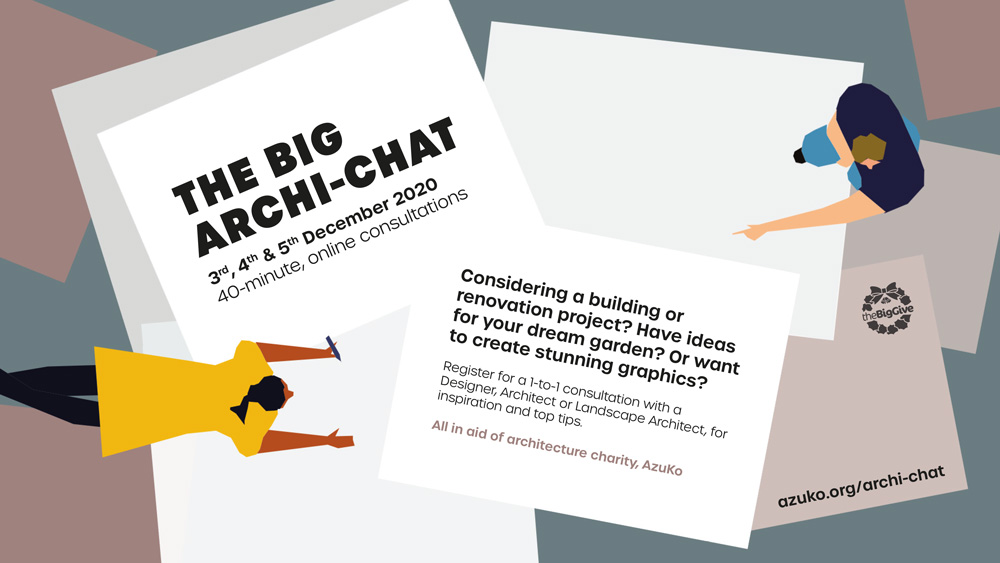
The Big Archi-Chat

The Big Archi-Chat

Get help and advice to kick start your dream home project and support an incredible charity at the same time.

Fancy a 1:1 consultation with a top architect, landscape architect or designer? 

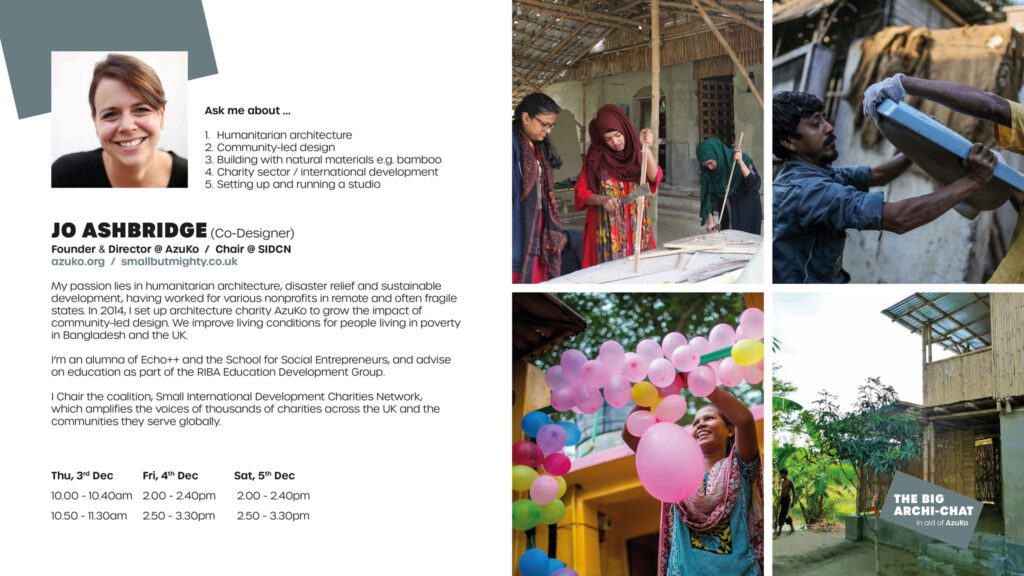
Azuko is an incredible charity with a dream of a just world, in which every person enjoys the right to dignified living conditions. Led by architect Jo Ashbridge, their mission is to design with disadvantaged communities and empower them to create the world they dream of. The fact is that good design, saves lives but access to that design or the funds to build those designs, for many is out of reach. 736 million people remain in extreme poverty, today. Design can provide solutions to the challenges they face and that’s where Azuko come in. They really are an exceptional charity (and we know because we have met many of the extraordinary people who run it and observe the impact of the ambitious projects they run).

But Azuko need your help to raise vital funds to build a new playground for a primary school in northwest Bangladesh. Those who follow Studio 31 will understand the vital importance of children having a safe outdoor space to play and connect with each other and with nature. Our children have the right to play but for many that right is a privilege. All children deserve that right and we want to help Azuko achieve that goal. 

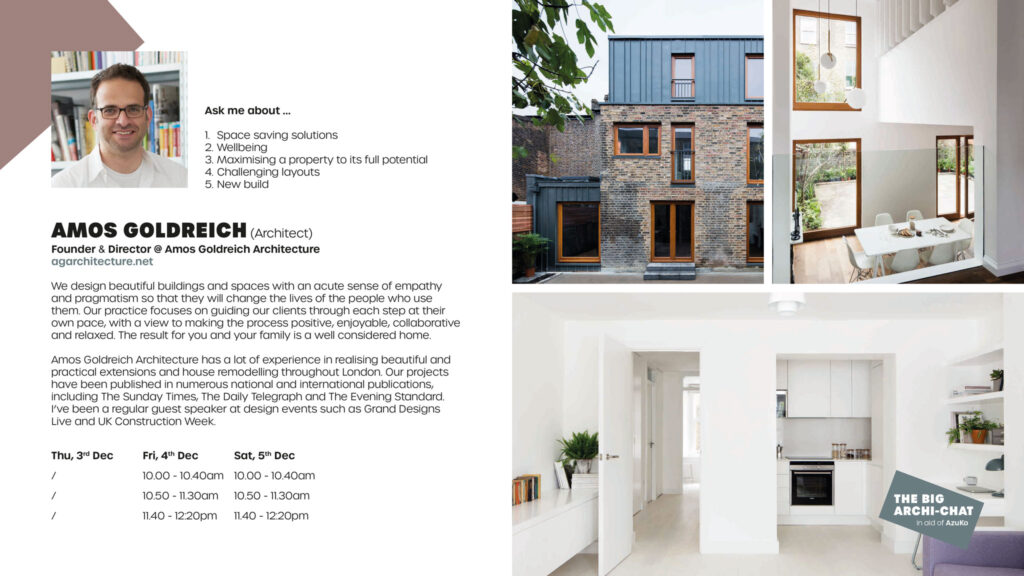
Whether you are building your dream home, dreaming of your future garden or need some support with graphic design, you can book a 1:1 consultation through their site with a range of super-talented designers. These designers include Jo Ashbridge herself, our Studio 31 Director Edward Flaxman, the very talented architect Amos Goldreich and graphic designer Mark Brookes to name but a few. You donate, you get a consultation with your dream designer and Azuko get to help the people who need it most. 

What’s more 1st-8th December is The Big Give Christmas Challenge. The UK’s largest match funding campaign, which runs from 1-8 December in 2020. AzuKo has been allocated a ‘matching pot’ to double donations made by our supporters. Which means, one donation, twice the impact. Head to their website to take a look at the designers and book a consultation

Mental Health at Work

Mental Health

A support directory; where to ask for help. 

Here at Studio 31, we often discuss the positive impacts of nature on health and wellbeing both physical and mental and for us, health is rooted in nature but… there are times when nature alone just isn’t enough. 2020 has been an extraordinarily tough year for many people, for many, many reasons. There have been moves forward including people’s growing connection with nature and understanding of the many benefits it has on our health and wellbeing. But there have also been overwhelming hardships; periods of isolation, disconnection and ill health. For many there have been impacts on businesses and livelihoods, anxieties in relation to loved ones and changes to routine and daily lives. I have seen many friends, family members and colleagues in the industry struggle to navigate this difficult time and there are few people upon whom this year hasn’t taken its toll.

I was recently asked to take part in the Futurescapes “Mental Health at Work “panel (a link to a recording of the panel can be found here) and one of the questions to be asked was “What one piece of advice would you give to someone struggling with their mental health?” Without hesitation, I decided mine would be… Ask for help.

The trouble is, asking for help is hard. For some, it is prohibitively hard. When I thought about this advice, it took me back to my early career in mental health where I recognised quite quickly that in addition to the multitude of social and emotional reasons which prevent people asking for help, there are also very real practical barriers. The most obvious ones being “Where do I ask for help?” and “How do I ask for help?”.

This blog is an answer to those questions. Below is a kind of directory, a list of organisations, places and people you can ask for help and a very brief idea of what support you can expect from them. This list is by no means exhaustive, but it is a starting point. Please do comment or contact me if you feel there are important people missing and I will add them. Some of these pertain purely to employment or horticulture (and I have made this clear) but the majority are access for all. Every one of these organisations appears on our mental health policy at work and every single employee has a copy of this policy. I hope that in reading this some employers may add a few of these to theirs.

Two final thoughts; I don’t believe that in sharing this list, I have made asking for help very much easier. Asking for help IS hard. The only thing I can offer is to say that, sometimes… it is also necessary. And to let you know this…whoever you are, whatever you’re feeling…YOU ARE NOT ALONE.

Mental Health Support Services UK Only.

IAPT (Improving Access to Psychological Therapies).Evidence based, talking therapies. Mostly cognitive behavioural focussed therapies. Referral to this service is based on the area to which the employee lives. Self-referrals are welcomed and this service can also be accessed via your GP. Find your local IAPT service here: https://www.nhs.uk/service-search/other-services/Psychological%20therapies%20(IAPT)/LocationSearch/10008

Samaritans. Telephone: 116 123 – Talking and Listening service 24 hours a day. You can also email, write a letter and use the self-help app. This is a warm, welcoming listening ear for, in their words, “anyone who needs someone”. This is not a therapy service. https://www.samaritans.org/how-we-can-help/contact-samaritan/

Perennial. Free confidential advice, support and financial assistance to people of all ages, working in or retired from horticulture. This includes financial advice, a free legal helpline and an online mental wellbeing community. https://perennial.org.uk/home/ways-we-can-help/

Reemploy Mental Health Support Service. Nine months work-focussed mental health support. To be eligible for this service, individuals need to be in permanent or temporary employment and have a mental health condition (diagnosed or undiagnosed) that has resulted in workplace absence or is causing difficulties to remain in work. https://www.remploy.co.uk/about-us/current-programmes/access-work-mental-health-support-service

Togetherall. (Formerly The Big White Wall) Anonymous service to connect with others experiencing depression and anxiety. Courses, Journals, Support and Advice. Focussed on peer support but monitored by professionals. https://togetherall.com/en-gb/

MIND. Mental Health Charity offering a wealth of information, support and advice. https://www.mind.org.uk/information-support/

Time to Change. A social movement changing the way we think about mental health problems. Provide support, advice, guidance about mental health problems, challenging stigma and much more. https://www.time-to-change.org.uk/about-mental-health

BACP Find a Therapist Directory and/or Counselling Directory. Directories where employees may be able to find private therapists and counsellors. This would be at your own cost but some therapists do offer reduced rates for low income.

https://www.bacp.co.uk/search/Therapists

https://www.counselling-directory.org.uk/?gclid=CjwKCAiA4o79BRBvEiwAjteoYLzfH6oPvSpAx4seXZifG4iT8YfW7lssNDymUOJRfiUXIDDhGWthWRoCdt0QAvD_BwE

Citizens Advice (Practical Support). It may be that practical or financial issues are causing mental distress, Citizens Advice offer a range of practical support services which are useful in supporting with housing, financial, work and other issues https://www.citizensadvice.org.uk/

ACAS (Employment Support). It may be a work issue is contributing to poor mental health. ACAS offer free, impartial advice on workplace rules, rights and best practice. They also offer training and dispute resolution. https://www.acas.org.uk/

GP. Anyone is able to access confidential mental health support/referral via their GP both therapeutic and pharmacological.

A and E. If you are in crisis with your mental health, this is no different to a crisis with your physical health. If you need urgent or immediate support, you can attend your local A and E department where you will be offered help and support.

If you are in crisis, please talk to someone. Please attend Accident and Emergency, contact your GP (daytime), telephone the Samaritans or call an ambulance. If you don’t feel able to contact a professional, please contact a trusted friend or family member and perhaps ask them to support you to get in touch with a support service like the ones above. It matters less who you ask, more just that you ask someone. You are not alone.

With the exception of GP, these crisis services are available 24 hours a day, 7 days a week.


Photo by Jeremy Gallman

Disadvantages of Artificial Grass

Artificial Grass. Why we should make space for nature instead.

Artificial Grass: Debunking the Myths and Making Space for Nature. 

There is no perfect material, we all know that. Every material we use has an environmental impact. As designers it is our responsibility to begin to understand these impacts in order to make better material decisions and increasingly engage with circular economy processes. We have written previously on sustainable materials here but today I wanted to focus on just one material; artificial grass. It is growing in popularity at a quite alarming rate and with debate raging in its favour from even those who consider themselves conservationists, I wanted to take a moment to explain why, we here at Studio 31, have never and will never, specify artificial grass. I also wanted to try to respond to some of the pro artificial grass comments to enable people to understand why there is always a better solution.

 Why Not Artificial Grass

  1. Artificial grass is plastic

Artificial grass is plastic. It is a petroleum-based product created using fossil fuels, producing pollution and creating waste. Whilst it is now often made using some recycled content, it is not compostable, biodegradable or fully recyclable meaning it will end up in landfill. There are some companies arguing that their product can be recycled. In reality this involves yet another intensive process to separate component parts; sending some to landfill whilst recycling others into new products (often which fossil fuels have been used to make) these new products then end up in landfill at the end of their life. The recycling process is neither standard, infinite or accessible meaning that even if it is ‘partially’ possible, it requires a good deal of effort on the part of the consumer and in reality, it doesn’t happen.

  1. Artificial grass has a huge negative biodiversity impact.

– Artificial grass results in habitat loss and has a detrimental effect on life both above and below ground. Preparing ground for artificial grass means heavily compacting soil which damages soil structure and reduces microbial activity and diversity within it.

– It takes hundreds of years for topsoil to develop, natural grass significantly reduces erosion of this topsoil and provides habitats for insects, plants and other organisms which are essential in breaking down and recycling organic materials.

– Soil is also involved in flood prevention and filtering pollutants from water both of which processes can be significantly compromised by using artificial grass (see point 7).

Artificial Grass

  1. Artificial Grass has a heating effect.

Artificial grass will heat up more than natural grass and maintain a higher temperature. When exposed to direct sunlight, artificial grass temperature can rise quickly and will not have the natural cooling effect of a real grass lawn. This can be dangerous for pets and children using the surface and also contributes to ‘heat island effect’ and its associated negatives including “contribution to global warming and unpredictable climate changes” (Deliami et al, 2018).

  1. Artificial grass is expensive

It costs somewhere between £45-60 per metre square to lay artificial grass plus installation and other associated costs. Natural grass is in the region of £5-7 per square metre. Meaning you could lay your lawn 9 times (every 2.7 years) in the 25-year lifespan of artificial grass and still be better off financially.

NB We don’t recommend replacing your lawn nine times in twenty-five years. Should you need to do this, you probably require another design solution or alternative maintenance programme.

Myths and Inaccuracies

  1. I can put pots out to attract wildlife

We agree that (in most cases), some plants are better than no plants, but potted plants will require high levels of maintenance (low maintenance is usually a primary factor for wanting artificial grass) and do not contribute to the soil in the same way planting direct into the ground does. The life cycle of plants means that decaying plants add nutrients to the soil and many organisms live on the roots and unseen parts of a plant. A few plants surrounding artificial grass will never be a substitute for a natural garden. Wildlife requires connection, corridors through which to travel, reproduce and feed and good quality soil underground in which to thrive. Isolated pot plants are not a substitute for a garden forming part of a wildlife corridor. 

  1. I hate bugs. Artificial grass means I won’t have any insects or pests in my garden

I understand that for some, certain parts of nature are frightening, irritating or undesirable and though we at Studio 31 are insect lovers, we understand this isn’t the case for everyone. However, attempting to reduce insect population in a garden by completely replacing grass with artificial turf is unlikely to work and actually more likely to create an ecosystem imbalance. The simple fact is that love them or hate them, those “insects and pests” are part of the great web of life. Without them life on earth simply couldn’t survive; the plants and flowers that the insects pollinate, the birds and small mammals which feed on them and subsequently the larger predators which feed on the small mammals would all eventually die out. The survival of those insects and ‘pests’ is interconnected with our own survival and whether we want them inside our homes or not, we need them in our gardens. You may think that your small garden space won’t have much impact on this problem but domestic gardens contribute between 22 and 36% of the total urban area (Gaston et al., 2005; Mathieu et al., 2007) and a significant proportion of the urban green space, between 35- 47% in the UK (Loram et al., 2007 cited in Cameron et al.). That is a huge proportion of urban green space meaning YOUR garden is of HUGE importance to nature.

  1. I don’t have to water artificial grass.

No but you do have to wash it. Many companies argue ‘water saving’ as the number one environmental benefit for artificial grass but again the reality is that the damage done by this product in terms of water far outweighs its water saving benefits. Soil filters many harmful pollutants from water which means that by the time water reaches water courses, it has been cleaned. Many artificial grasses are non-permeable causing water to run off rather than through the soil. Those which are permeable require maintenance to ensure drainage holes don’t become blocked and often the ground compaction required for the artificial grass to be laid compresses the soil so much that water is unable to permeate it and runs off under the membrane instead. Artificial grass contributes to water pollution and flooding as well as poor soil quality.

  1. Artificial grass is the only option for people with mobility difficulties.

Put simply, no it isn’t. It is perfectly possible for a lawn to be laid level and be suitable for those with hugely varied degrees of mobility including wheelchair users. Why should the health and environmental benefits of nature be denied to an individual simply because of their mobility? Those who say artificial grass is the only answer, aren’t working hard enough to be inclusive. At Studio 31 we design for health; nature has inordinate health benefits and we want everyone to have access to those

  1. You have to mow real grass

Gardens are living things and as such do require some maintenance. With a lawn, this usually means mowing but is unlikely to be all year round and to reduce environmental impact; can be with an electric mower powered from renewable energy sources. ‘Low maintenance’ is probably our number one request from clients and it is very possible to create a low maintenance, functional garden (with or without lawn) but with zero plastic. If you are fortunate enough to have a little space, you can also attract a great deal of wildlife to your garden by allowing areas of grass to grow up which require cutting only once per year. Even just a tiny “wild” corner can attract a huge diversity of animals.

Artificial Grass

  1. Artificial grass is zero maintenance

Contrary to popular belief, artificial grass also requires maintenance. It requires regular cleaning and the cleaning requirements are much higher where animals are using the surface. The smell of animal urine on the grass is a common problem and pet hair (and other debris) needs to be regularly swept from it to allow water and other liquids to drain. Given the choice between washing (and sweeping) my grass or mowing it, I know which I would choose.

  1. Other materials also have negative environmental impacts.

By arguing that artificial grass has negative environmental benefits, no-one is arguing all other materials have positive ones. There are many materials whose uses need to be assessed and potentially restricted or banned. This doesn’t change the fact that artificial grass has a huge negative environmental impact and better material choices can always be made.

  1. Artificial grass negates the use of harmful pesticides and chemicals used on lawns.

Mosses and weeds growing within lawns increase biodiversity and, in many cases, make lawns look greener. For this reason, many people never treat their lawns (we have never treated ours at home) however for those that do, there are a number of natural methods of treating your lawn and an abundance of organic products on the market which don’t cause environmental damage. Additionally, there are increasing reports of gardeners being asked to “weed” artificial grass as mosses and weeds are growing on those too. Leading, ironically to a very strange aesthetic and people using pesticides on their artificial grass. 

  1. Artificial grass is safer for my children

Again, put simply, no it isn’t. The benefits of nature connection to children include improved problem solving, improved concentration, improved academic performance, safer risk taking, improved social relationships, reduced stress and anxiety (improved mental health), increased physical activity, improved nutrition and improved memory. Even if a lawn were to be patchy, muddy or bare, it would still be infinitely better for your child’s health and wellbeing than artificial grass. Children need nature urgently and in greater abundance than ever. Your garden, school field or local park space might be their only way to access to nature, and we simply can’t support covering them in plastic.

Child in Nature

The solutions

The solutions are many, varied and often site-specific so it is worth getting professional advice from a designer or landscaper. However, just some of the options include shade tolerant lawns, slow growing lawns, correct lawn preparation including getting drainage right, correct sub-bases and environmentally friendly maintenance products. All of which are likely to increase the chance of having a thriving, low-maintenance lawn. There are also other alternatives to a traditional lawn including some hard and soft landscape elements which have a marked lower environmental impact than artificial grass.

I know that the marketing for artificial grass is powerful and persuasive and often it does feel like an easy solution to a whole host of garden problems but with a little knowledge and some good design there is always a better way; a way that is healthier for people and planet. That said, we know that maybe for some, even the arguments above and any design solutions presented will still make not using artificial grass feel like a compromise.  To those people, what I would say is this; with the climate crisis more urgent than ever, we all need to make compromises for the health of the planet and it is my belief that, whatever your reasons for wanting artificial grass, choosing not to use it, is one compromise well worth making.

References
Alloway BJ. 2004. Contamination of soils in domestic gardens and allotments: a brief overview. Land Contamination & Reclamation 12, 179-187.
Delilami, K., Kamruzzaman, Md. And Liu, Y. (2018) Urban heat island effect: A systematic review of spatio-temporal factors, data, methods, and mitigation measures. International Journal of Applied Earth Observation and Geoinformation. Vol 67. Page 30-42.
Gaston KJ, Warren PH, Thompson K, Smith RM. 2005. Urban Domestic Gardens (IV): The Extent of the Resource and its Associated Features. Biodiversity and Conservation 14, 3327-3349.
Gibbons S, Mourato S, Resende G. 2011. The amenity value of English nature: a hedonic price approach. London, UK: Spatial Economics Research Centre (SERC), London School of Economics and Political Sciences
Hoorman, J. and Islam, R. (2010) Understanding Soil Microbes and Nutrient Recycling. Agriculture and Natural Resources. The Ohio State University Factsheet.
Loram A, Tratalos J, Warren PH, Gaston KJ. 2007. Urban domestic gardens (X): the extent & structure of the resource in five major cities. Landscape Ecology 22, 601-615.
Mathieu R, Freeman C, Aryal J. 2007. Mapping private gardens in urban areas using objectoriented techniques and very high-resolution satellite imagery. Landscape and Urban Planning 81, 179-192
Ross W.F. CAMERON , Tijana BLANUŠA, Jane E. TAYLOR , Andrew SALISBURY , Andrew J. HALSTEAD , Béatrice HENRICOT and Ken THOMPSON.  The Domestic Garden – Its Contribution to Urban Green Infrastructure.
Smith, C., Dawson, D., Archer, J., Davies, M., Frith, M., Hughes, E. and Massini, P., 2011. From green to grey; observed changes in garden vegetation structure in London, 1998-2008, London Wildlife Trust, Greenspace Information for Greater London, and Greater London Authority. Figure calculated using land identified as “private residential gardens” in Ordnance Survey MasterMap® Topography Layer data (updated June 2006).


Photo by Jonas Weckschmied

Racism and Landscape Architecture

Racial Justice in Landscape and Nature

Landscape and Nature-based Resources. 

As an ethical practice with strong moral stances on topics like climate change, wellbeing at work, nature connection and health, we are always looking for ways to improve our practice. We are a collection of passionate individuals striving to do things differently, constantly trying to better our relationships with climate, health and landscape and looking for ways to improve both ourselves and our practice.

The Black Lives Matter movement being brought to global attention in the past few weeks has brought our own focus and attention to the topic of racial justice within both our own small practice and also the wider landscape industry. It is neither right, nor acceptable that it is only now, our focus has been directed there but now that it is, it is not our intention to look away.

We watched this video by Light Watkins a couple of weeks ago which talks of a conversation with a meditation student in one of his classes where she asked why no-one had created a directory of meditation teachers and Light’s response was “because you haven’t created one yet”. These past weeks, we have googled, researched, read, been signposted to innumerable resources which we are slowly working our way through (each directing us to another) and beginning, what I suspect will be a lifelong journey in relation to racism and anti-racism both personally and specifically within the realms of landscape architecture, landscape, nature, business and organisational management and beyond. Finding that business and landscape specific resources are few, sporadic and difficult to find (and with Light’s video in our minds), we have been compelled to collate just some of these resources here.

We hope that those working within landscape, nature, the built environment or even running their own unrelated small practices may find these useful and may lead to a conversation where individuals and/or organisations may also share further resources such  as articles, papers, journals, podcasts, books and organisations whose voices and education are important in creating anti-racist landscape and nature-based organisations and industries.

It is the voices of those contained within these resources who will educate and guide the way to creating racially just practices, industries, economies and governments, but it is our responsibility to first learn, then act to create a better and anti-racist world.

Landscape Architecture

Landscape Architects Network (Land 8).  Webinar and Q and Equity, Justice and Landscape. The built environment is going through a rapid re-examination of its role in enabling or inhibiting social equity and racial justice. How could this impact how landscape architects are taught and how they practice? How could we encode equity and justice into our work?

Black Landscapes Matter. An article by Kofi Boone (Professor of Landscape Architecture) published in issue 06 of Ground Up Journal initially and subsequently on the World Landscape Architect Blog.

Decolonizing Design: Black Narratives in Landscape Architecture– A recorded presentation from the ASLA library of recorded presentations and education sessions.

The Urban Studio. Expanding how students of color are educated and engaged around design. The mission of the Urban Studio is ‘to advance design thinking for equitable + sustainable urbanism.’ As designers of color working in communities of color, our goal is simple, to green cities for all people.

Nature and the Environment

Diverse Green – Looks at diversity within environmental organisations.

The racial composition in environmental organizations and agencies has not broken the 12 percent to 16 percent “green ceiling” that has been in place for decades. […] Confidential interviews with environmental professionals and survey data highlight alienation and “unconscious bias” as factors hampering recruitment and retention of talented people of color. […] The Result: An overwhelmingly white “Green Insiders’ Club.

An article by Somini Sengupta compiling a list of resources, voices and articles on the link between the environment and racism.

Dr Ayana Elizabeth Johnson– Marine Biologist. “For conservation to be sustainable, it can’t be just about doing the actual conservation work, but doing it in a way that works for people and communities” “I need you to understand our racial inequality crisis is intertwined with our climate crisis”

Just one article by Dr Ayana Johnson (Above) “People of color disproportionately bear climate impacts, from storms to heat waves to pollution. Fossil-fueled power plants and refineries are disproportionately located in black neighborhoods, leading to poor air quality and putting people at higher risk for coronavirus.”

Black Faces White Spaces; Reimagining the Relationships of African Americans to the Great Outdoors by Carolyn Finney [BOOK]

The Willowherb Review– A digital platform to celebrate and bolster nature writing by emerging and established writers of colour.

People of colour in environmental and climate justice. Links to individuals, research, work and organisations who understand the intrinsic link between climate and social justice.

WE ACT. Combating environmental racism and building healthy communities for people of color since 1988.

Business Training and Education

JUST A program of transparency in relation to social justice and social equity within your organisation.

Design and Racism

Where are the Black Designers is an initiative which aims to give a platform to creatives of color. By connecting designers, educators, and creative leaders we hope to start a dialogue about change in and out of the design industry.

Built Environment

Power Out of Restriction (POoR) Collective is a social enterprise which aims to focus on the development of communities within the built environment. We believe in the power of community and aim to help those who are often under-represented. Through teaching, knowledge sharing and workshops we aim to bridge the gap between communities and bring together a wealth of demographics, cultures and social classes.

Stephen Lawrence Charitable Trust. We believe that architecture as a profession and the built environment that surrounds us should be designed by the people who live in it, celebrating and giving voice to the rich and diverse cultural heritage of people from every background. “only 10% of apprentices in England are from Black, Asian and minority ethinic backgrounds although 25% of applicants come from those backgrounds”. They have also launched the Architecture Race Diversity Survey in partnership with Architects Journal.

The NAACP Centring equity in the sustainable building sector. “Communities of color and low-income communities bear the brunt of the impacts of unhealthy, energy-inefficient, and disaster-vulnerable buildings”

Donate

Black Land and Spatial Justice Fund – This fund has been developed to redistribute resources, including finance and knowledge, engaging in decolonial frameworks and collective organising to redefine our relationships to land and space.

It is possible (and important) also to donate to many of the organisations above including: The POor Collective, Stephen Lawrence Charitable Trust, WE ACT and The Urban Studio.

Photo Credit : Philippe Bout https://unsplash.com/@flipboo