
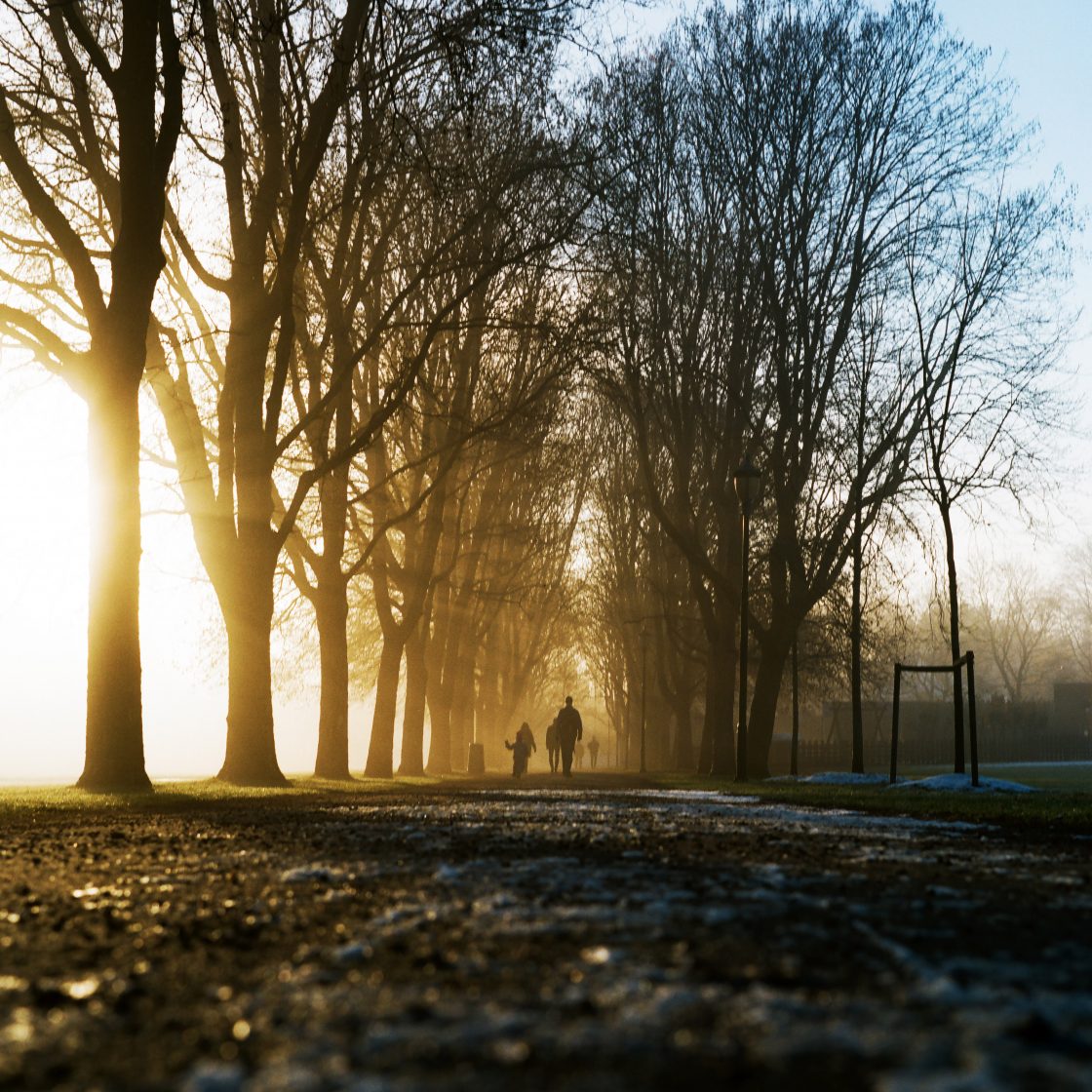
How urban trees shape our cities
Last month, the Forestry Commission released a shiny new report entitled “Delivery of ecosystem services by urban forests”. At last there is a report which pools much of the existing research pertaining to urban trees and presents it in an influential yet strikingly analytical read.
In its totality the report hopes to inform future policy on “nature based solutions to climate change, health problems and the challenges of urbanisation”. Largely for the first time, it considers the detail of this, discussing the specific attributes of not only individual trees but also lines, clusters and the broader woodlands. It goes as far as to look at the benefits and deficits of tall versus short, deciduous versus evergreen and broad versus narrow canopy. All of which is something previous research has in the main, failed to do.
But if you’re not a fully fledged tree report reading geek such as I, is there a different way to understand this report? When we talk about ecosystem services, carbon sequestration and noise mitigation, what do we really mean and why should anyone care?
73% of the population of Europe lives in cities (UN, 2014) so it makes sense then that governments would want to consider the well being of that large majority and perhaps also whether their proximity to the natural rather than built environment has an impact on that well being.
This term “ecosystem services” put simply means “the benefits that people derive from nature” (Forestry Commission, 2017) and it may surprise you to know there are many more of them than you might initially think. Take for example “food provision”. Laughable maybe to consider taking to the streets of London to forage for food from the local tree population? But then think of those times in your childhood where your head was buried in a blackberry bush, cheeks purple with the stain of a freshly picked (and consumed) harvest. I see reference upon reference to local mushroom picking courses which advertise wandering the forest floors in search of ingredients for the latest fashionable wild mushroom risotto recipe. Cast your mind to Christmas and the smell of chestnuts roasting at street side stalls and children wrapped up for autumn delicately prising open prickly shells to their reveal shiny brown core. We love to “pick our own”, delight at the prizes nature has to offer and secretly revel in the quiet satisfaction this provides. Chestnuts, pine nuts not to mention the abundance of fruit on offer from trees turns our city streets from concrete jungles to local greengrocers.
That said, some of the largest benefits our urban trees have to offer are not (as in the case of fuel and food) goods but instead services. Our cities are primarily built from brick, concrete, tarmac and similar industrial materials; materials which absorb the heat and reduce the ability for water to escape naturally. The result of this, are cities with increasingly high temperatures and more at risk of flooding. With the great British weather not often the subject of “too hot” complaints, it’s slightly astonishing that heat-related stress accounts for around 1100 premature deaths per year in the UK (Doick and Hutchings, 2013). Trees mitigate against this by providing shade and blocking solar radiation. They also intercept rainfall and reduce surface water run-off thus contributing to flood prevention in urban areas (forestry commission, 2017).
Perhaps more commonly cited than temperature regulation or flood prevention is trees’ ability to purify the air. This report quantifies that, suggesting that management of street trees and woodlands has been found to be a cost effective way of reducing particulate matter (the potentially harmful particles in the air such as soot and dust) compared to technological or policy measures such as the use of greener fuels. With scientists across the globe focused on the task of reducing global warming, smog and the various other harmful emissions we as humans produce, this literature is suggesting that the humble tree is in fact a large part of the answer.
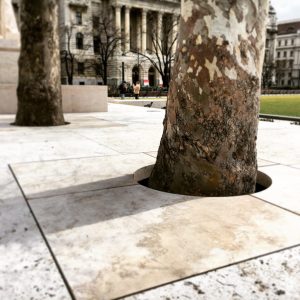
There is a common misconception that any nature that is present in cities should be “left well alone” so that is can be persevered. The forestry commission paper argues that in fact, the careful and responsible management of our trees and green spaces contributes far more to enhancing the benefits that they provide than it does harm to them. It may seem obvious but there is research which actually proves that facilities (toilets, paths, signs) will improve usability and accessibility (Doick et al. 2013) and that the more people come into contact with urban trees, the greater the cultural, health and educational benefits.
The report references similar concepts to the ones we cited in our earlier blog on healing gardens and even goes as far as to state that nature is good for the soul. Well, ok, it doesn’t say exactly that but it does say that sensory elements like the sound of walking on crunchy leaves, bird song and the smell of damp wood after the rain all increase our connection with landscape and in turn our well being. There is a word we came across “petrichor” many moons ago, simply defined as “the smell after rain falls on dry soil” (Oxford Dictionary, 2017). We all know that smell, so familiar it is, that we almost named our practice after it.
Much of this report does appear to state the obvious but the point that would be easy to miss is that there is invaluable importance to doing that; it provides tangible evidence to the commonly accepted anecdotal support and therein provides much needed credibility.
For those who care the less about the wellbeing and environmental aspects that our urban trees provide, there are also a wealth of economic benefits. They boost tourism, provide setting for recreation activities and more indirectly generate employment in the form of arboriculture consultants, tree surgeons and many other landscape professionals.
It makes sense then that there are campaigns in abundance supporting the preservation of our green infrastructure of which trees make up a substantial part; The Tree Council, The Ancient Tree Forum and The National Park City Campaign to name but a few.
The conclusions to this report state largely that a management plan needs to be put in place which provides an overarching strategy for tree planting, maintenance and conservation in urban areas; a plan which considers carefully both the stakeholders involved and the location and function of any given tree. It appears urban forestry is both a science and art and requires both scientists and artists at the helm. However I wonder whether it is not only up to a wider government or even private sector initiative but also up to us as professionals and on a smaller level still, us as citizens of our cities to play our part too. We can use our trees, care for our trees, engage with them, play with them, plant them and protect them. As landscape architects, we use trees in almost every scheme we design and this report draws our attention back to the way in which we use these trees, particularly in urban environments. Are we, as the report suggests, considering the true value of the tree across all its ecosystem services rather than a purely aesthetic tool and if not is there a way to do both?
We think so.
Photo by Ilya Ilford