Hope and Landscape Architecture

Finding solutions where only impossibilities are found 

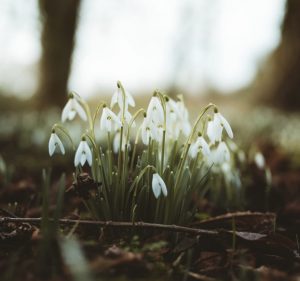
Hope. It’s the reason why we buy lottery tickets, enter all those Instagram competitions and rebut medical diagnosis in favour of being the one in a million-miracle cure. It’s the reason we chase impossible dreams and above all it’s the catalyst for change.

I have believed for a long time that hope is a more powerful tool than fear and as a practice, it’s a philosophy that runs through the veins of Studio 31. Increasingly today, we live in a world of soothsayers who predict the end of life on earth and point out the imperfections and immorality of our most imperfect of race’s. I don’t doubt the importance of their role in our society and our future; indeed we need the journalists, scientists and academics to help us understand the level of catastrophe we are causing and the depth of the repercussions of our actions. However, we also need solutions.

Enter the X prize. This was recently brought to my attention by a colleague, a hypothesis that in the midst of all the wildly diverse minds on this planet, lie the answers to all the world’s problems. A vision that solutions are collective; born of collaboration, togetherness, community and a firmly optimistic belief that “there isn’t a problem that cannot be solved”.

Yes, it is an organisation born of space travel and yes, there are those that could, perhaps rightly, argue the unsustainable motivations of its past, but that first seed of hope has sparked true innovation, creativity and technological advances that have the power to change the world. Its mission now is to create a ‘future for this planet that we can be proud of’ and it seeks to provide people with the motivation (financial and otherwise) to seek solutions where only impossibilities have been found before.

Peter Diamandis said “The day before something is truly a breakthrough, it’s a crazy idea” and that’s true. It’s hope though, that transforms that crazy idea into a reality and organisations like the X prize that seek to bring together the hopeful with the “crazy ideas” to a common cause and greater good…as landscape architects maybe there are synergies there.


Photo by Nagara Oyodo
Change the World

Grand Designs Post Show De-brief…health, sustainability and changing the world.

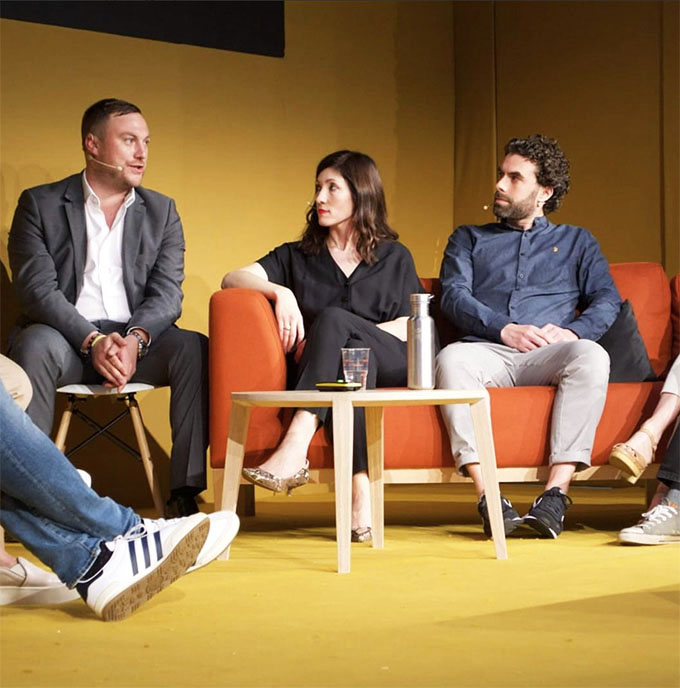
Talking Health, Sustainability and how Landscape Architecture has the Power to Change the World at Grand Designs Live

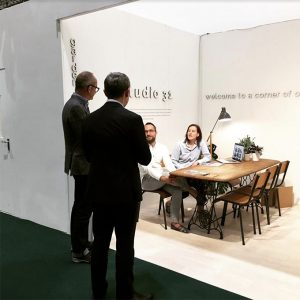
Wow, what a whirlwind Grand Designs Live was this year. One grand theatre solo talk discussing the value of landscape to our health, our environment and our budget, two panel talks about health and our homes and a chance to showcase our studio and incredible work of our team here. We met some inspirational professionals from architects like Studio Bark who have created a sustainable modular self -build system that quite literally is revolutionising the world of self-build, to passionate presenter Kunle Barker tackling important issues of health, landscape, housing and climate change (whilst making us all feel at home on stage which is a foreign space to us). We met (if briefly) Kevin McCloud who (more than just a figure head for the show) was making waves about sustainability, climate change and was en-route to speak to parliament about the housing crisis. Next time, we are hoping to grasp him for long enough to get his viewpoint on the role of landscape to the built environment, health and our planet (we will get you next time Kevin) but for now just hearing him inspiring the public was enough.

Change the World

It was refreshing to see the team behind the content and marketing for the show pushing for new, sustainable and extraordinary approaches to self-build. Their open minds, drive for innovation and support for new studios and ideas is something we haven’t seen rivalled at other big shows. They really are the unsung heroes of events like Grand Designs Live.

We won’t lie to you, the show is exhausting after 9 days solid and a studio to run but really is an opportunity to meet like-minded professionals and speak passionately about both our work and our ethics. The way our research-led design for health and sustainability strategies were received at the show, is really a symbol of the changes in minds and hearts that are starting to be made as greater education on these topics is being brought to the fore by the media.

I was asked at the show by a peer “what did I think of the recent UN report about species loss and extinction?” and whilst the gravity and severity of the problem weigh heavy on my heart, after the show, I remain eternally optimistic that we have the power to change this. It’s my belief that Landscape Architecture can change the world and there’s a whole host of professionals, landscape and non-landscape alike that are working to that same end. The task is great and the way forward not always clear but I remain hopeful, because when hope is lost, so are we.

I’ll leave it there for now because post-show chaos awaits along with exciting meetings with prospective clients and cementing relationships with new found professionals and friends. See you next time Grand Designs!


Modern Essex Home

Studio 31 Speaking at Grand Designs Live 2019

Talks, panels and consultations at Grand Designs Live 2019 

Studio 31 will be attending Grand Designs Live at the Excel, London again this year. Our involvement this year is greater than ever before with us involved in talks, panels and expert sessions on all things landscape, health and design.

As the design and build industry takes a shift towards landscape driven schemes and the wider health and social care sectors beginning to see the value of nature to health and wellbeing, Grand Designs Live this year has stepped up to the mark in exploring nature and health themes through its show programmes and collaboration, once again, with Friends of the Earth. With our ethos at Studio 31 very much exploring research-led design for health, we have been fortunate to be asked to be involved with just some of what looks to be an exciting programme.

We will as usual have our sustainable stand G2 in the Grand Gardens section and Alex will be taking part in consultations as part of the Ask and Expert panel but this year Edward will also be giving a talk on “Learning the Value of Landscape” exploring the ever growing link between health and landscape as well as the value of landscape to your own project or grand design. We will also be involved in a health focussed top tips panel as well as a discussion talk with a team of industry experts on “Health versus House”.

Below are just some of the things Studio 31 are involved with at this year’s show and we would love for you to be there too so if you’d like to join us, just head to our Instagram for the last few days of a competition to win tickets to the show along with more than a sprinkling of houseplants.

Studio 31’s involvement at the show this year includes:

– Talk Monday 6th May, Grand Theatre. Learning the Value of Landscape.

– Top Tips Panel. Monday 6th May, Grand Theatre. Health House

– Talk Saturday 11th May, Grand Theatre. Health Versus House.

– Ask the Expert Panel– Sunday 5th May and Wednesday 8th May

Find us at Stand G2 – Close to the entrance of the Grand Gardens Section.


Press or Media enquiries please head to our Press Pack which can be found here.


Design for Health

The role of Landscape Architecture in Designing for Health

The Role of Landscape Architecture in Designing for Health

There is an increasing awareness across not just landscape but the whole built environment of the link between design and health. The places we choose to spend our time; the landscapes, the buildings and everything in between have a real and very distinctive impact on our health. The link between nature and health can be traced back through millennia and more recently the evidence supporting these theories has cited benefits right down to a cellular level.  Professional bodies like the Landscape Institute, RIBA and even wider government bodies are beginning to look at this idea as a real development in the realm of design. The LI even put out a manifesto back in November 2013 highlighting their healthy places strategy and those who follow our practice will know that here at Studio 31 “design for health’ is a core part of our ethos.

One big question remains though. Much of the research is directed at uncovering the links between health and landscape, place and nature but how do you design for it? Much less research pertains to the art of design for health, though increasingly researchers are taking huge steps to understanding more about this.

One thing we do know is that, as with all things design, ‘design for health’ is not a ‘one size fits all’. It’s easy to believe that there’s a generic formula to using certain plants, materials, structures or layouts which are known to have a positive impact on health, but this just isn’t true. The very real danger of this belief is that, in having a generic view of designing for health, we are in fact at risk of having the opposite effect (there is even some research to support this hypothesis). The way a place has an impact on someone’s health will depend on a number of factors, not least the way a user perceives both a space and their own health.

When thinking about design we should be asking questions such as; what are we designing for? Are we designing a space as a treatment/therapy, to be health promoting or even to prevent ill-health? How do the users view their own health?  How are we anticipating the users of the space to interact with it? Are we considering the impact on the users if it is not used for its intended purpose? Research suggests that if this is the case, it is likely the health promoting effects will be greatly reduced. As a profession how can we define the use of the space as part of the concept design?

This paper, written by Ulrika Stiggotter on Nature, Health and Design, highlights many important points specifically in relation to Landscape Architecture. That though the profession itself is becoming increasingly evidence based, very little of the research in relation to nature and health has been conducted from a landscape architecture perspective and this makes the application of theory to landscape architecture (or indeed architecture) difficult.

More work needs to be done which is relevant to the vital role the profession has to play in designing for health and the results of this should include tools and training for landscape architects and other professionals to use in designing with this strategy in mind.

As a profession, we also need to move forward with facilitating and encouraging education around health and landscape and look to personalise design for health in the same way that all design in personalised.

Landscape architecture is increasingly becoming the profession of the future. It’s impact on almost every issue of our time (including health) is potentially colossal and there is more responsibility than ever on us to keep up with the evidence base and facilitate the research to keep up with us.


Photo by Kien Do

Curious

A Curious Design

A Curious Design

Our office is a curious place and as a result of the slightly unusual working environment we have created, we are increasingly finding that we have facilitated a space where really inventive design solutions can flourish. It seems not just design solutions though; design conversations. Of course, we don’t write blogs on all of these; often these conversations are cyclical and thought provoking rather than summative or conclusive but simply having them keeps our brains fresh, our perspectives broad and our opinions challenged.

One such conversation, last week began as idle office chatter about a night spent watching a classic film. This quickly escalated into a conversation about design perspectives.

There is always a lot of attention, in the world of architecture, given to the relationship between one room and another, one space and another and the building and its setting. The placement of walls and windows, furniture and artwork can all contribute to a buildings journey. The corner of a window from behind a wall or something as simple as reflection of light across a corridor, can influence your journey through a space. Small markers, the result of clever design, can reveal a home one pace at a time. The same applies to the connection of building with landscape; time and again the relative merits of narrow, well placed windows versus floor to ceiling glass are debated as the most effective way to connect home to setting.

But what of setting? What of landscape? We posted a couple of weeks ago, a shot from some drone footage of one of our projects under construction. A photograph, taken from the air is somehow like viewing the site on a CAD drawing; seeing the vision and connection of the site from the sky. As amazing as that is, it’s also not often how we experience landscapes. Yes, some do have the topography or character to incorporate aerial views and some like Hortillonnages in France, are even experienced from the water but more often, like a home, landscape is something experienced from the ground.

Just like buildings, landscapes are revealed to us as we wander through them. Like Mary and her secret garden, we have a curiosity. We are drawn to spaces and landscapes where everything isn’t discovered at once. Give a child a square formal garden and they will be drawn to the gate ajar in the 6ft wall and that’s as it should be. Gardens should make us feel curious, we should want to explore them. A garden, like a building can reveal itself plant by plant, step by step. Unlike a house though, gardens are ever changing. Every time you step into a garden it will have changed a little; something new will bloom, something may have donned its autumn coat or lost its winter scarf.

Garden’s just like homes, change with their function. They too may have zones or rooms but these are separated not with walls but with design. This isn’t just one design though, it is many. The design of a garden must account for its changing shape both through the seasons and through the years. It must look through the eyes of a child and perspective of an adult. It many cases, it may even look through the eyes of the fauna who will also call it home. It may be viewed from inside a building or back on itself from a further wild spot and it must carry you from one space to the next, feeling both separate and part of a whole.

The perspective we have on a landscape influences not only the way we interact with it but also the way we feel about it. And not just the way we feel about the landscape itself but also the way we feel within it. Perspective in a design sense then, is crucial but also subjective. It’s true there will be many constants we can design for but in the same breath there will be many ideas which will flex with the site, the client and the brief.

What remains though when every project is stripped away, is curiosity. We should want to explore and engage with our gardens, our landscapes and our homes. Perhaps then we should think of our designs not only as a set of guiding principles, drawings and lines but also as stories. Stories which draw us into them and make us feel curious and are discovered as we move through them. Perhaps Leo’s Buscaglia’s words say it best…

“Life is uncharted territory. It reveals its story one moment at a time.”


Photo by Toa Heftiba

Architecture of Memory

The Architecture of Memory

Fairytales in Architecture

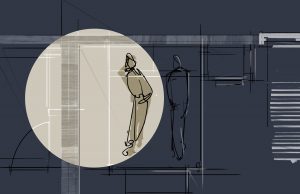
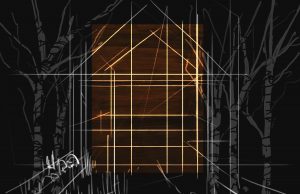
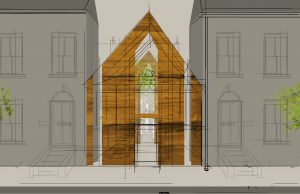
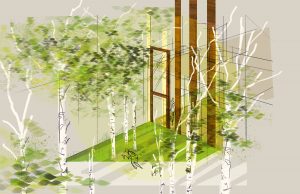
Towards the end of last year, we entered the Blank Space; Fairytales in Architecture competition; a competition which has become synonymous with capturing social and environmental issues in the architectural industry through fiction (If you haven’t seen it, do check it out). What follows is our entry. Often fiction can translate a message in a way that facts simply can’t, so in true Studio 31 style, the concept behind our entry was to try to explore the link between architecture, landscape architecture and health. The story is a brief moment along one man’s journey with dementia and the subtle but significant impact of building and place on his health, well being and memory. Much of our work here at Studio 31 follows a design for health agenda and we are keen advocates that design has a huge role to play in both environmental and health issues. ‘Design for Health’ is a BIG but important topic and what follows is only a drop in the ocean but hopefully it can inspire further change and discussion in the realms of design. The piece was illustrated by talented artist and illustrator Sam Wilson who has a particular affinity with architectural forms and it is with thanks to him that we also share the attached images which can be found in their full form on his website.


The Architecture of Memory

Horace

It’s square, too square, this room with its freckled plastic walls and felted ceiling. The window, bizarre and pointless exhibits the red brick of the building next door. It casts a shadow where light should be.  I stare hard at the eastern wall, hoping somehow that an opening might appear. All buildings should point to the east, my first mentor taught me that. The sun should rise on your face as you leave your house and set on your garden when you return. From that day to this I have never craved the predictable light of a south facing garden.

“You ok Dad?”

A voice winces at me from a curled and uncomfortable slumber. Its owner resides in a blue, tall backed chair; the kind you usually find in hospitals.

I look to her then back to the east. “Wrong room”, I say.

“Dad”, she persists.

“Wrong room”

She stays. I relent. I fumble to pull my socks over my shoes and push past her into the corridor. Her voice rings out behind me and I quicken, slowed only by the relief of the late spring air on my face as I stumble outside. I turn. She has not pursued me. I continue regardless.


Rowan

The sadness is not lost on me. Some call it irony but for me that’s a term reserved for dry humour and here, there is only sadness. He was an architect, an engineer really. The best of his kind now doomed to four intolerable walls and a window that looks onto a fifth.

I suppose the illness grasped him long ago; forgetfulness and occasional eccentricities. But the eye doesn’t see what the mind won’t acknowledge, “Aren’t all architects eccentric?”, that’s what Mum used to say.

Now, I sneak into his room and pretend to be asleep beside him. He tolerates me then and from my position under a cellular blanket I listen. Mostly inane ramblings, sometimes architectural critiques but largely he is just incoherent. Never the less, it gives me comfort to hear his voice; soft and undulating as it used to be.

Sometimes I build the courage to engage him but mostly now he banishes me from his room with varying degrees of ferocity. Today was one such day. I didn’t chase him, I hadn’t the strength. The tears were flooding my cheeks so hard they melted my knees. It wasn’t until later when I had retreated back under the blanket, that a nurse raised his absence. I wasn’t alarmed. Despite the uncertainties of dementia, we were fortunate that Dad’s escape attempts had always led him to the same place. I knew where he would be. 


Horace

I plunged my hands into the soil; warm and dense. A gardener’s work is never done. I plucked purposefully at the stray green attempting to strangle the alliums and strained my head towards the house.

Now this was a building! Oak timbers stretching skywards and framing generous windows. Windows that were flanked by birch, ash and aspen. The trees themselves casting swaying shadows across the timber floors inside. It was compact but not small, unassuming yet captivating. Light poured into its form and the building breathed. Life ran through it as it had once run through the veins of the trees which formed its bones. Here, I could breathe too.


Rowan

It was a plain street. Ordinary houses all in a line; their monotony broken only by occasional street trees cracking the pavement. Ordinary houses all, except one. ‘A triumph’ they called it, ‘ahead of its time’. Now here I was ahead of mine… ahead of his.

I held my breath and leaned hard against the side gate. At this distance he may have been mistaken for a conscientious gardener and though I knew that his fingers were not green, I wanted to hold that image just a little longer.

He noticed me, which was, perhaps, a blessing for the Stipa he was plucking relentlessly from the ground. I smiled. He didn’t.

He rose and walked to the building hailing its many virtues as he went. Ever the architect, even now. It comforted me that he retained this part of himself when so much else was lost.

In his fervour his arms flailed and his socks, straining over the outside of his shoes, flapped muddying his camel trousers. He looked tragically comical, like some enthusiastic children’s entertainer.

He stopped inches from me and with his next words broke through my thoughts…

“Aggy. Yes, my Aggy would dream of a house like this.” He paused “Aggy?”.

His eyes caught a glimpse of mine; emerald like hers before me. His face searched mine and a light flickered within him. I waited, I hoped but he didn’t find her, he didn’t find me. The flame extinguished before it could grasp the wick and my heart fell, crushed under the weight of it all.

He ran his hand along the cladding, the rough timbers catching his skin softly as he went. The tall grasses rustled against his outstretched arm and without turning he asked a question, “Tell me. What kind of a man built a house like this?”

My eyes stung with the tears fighting to escape them and my knees faltered. I placed my hand against the oak and just for a moment, we were silent. Our fingertips connected through the veins of the wood beneath them. It was the closest I had come to touching him for a long time.

His question clung to me like a fog; humid and suffocating.  “What kind of a man built a house like this?”

I pushed the lump in my throat down and finally a voice found its way out,

“You did, Dad. You did”.


Architecture of Memory


Written by Katie Flaxman.

Illustration by Sam Wilson.


Right Colour Right Place

Right Colour, Right Place

Welcome the fifth and final blog of our “Right Design, right place” series. A blog which aims to explore some key aspects of design in the context of landscape.

Today is “Right colour, right place”.

When it comes to interiors, colour is a science. Interior designers spend their whole careers perfecting colour schemes and there are whole branches of science dedicated to the art of colour. We’ve even attended a couple of talks by artist and designer Anna Jacobs which demonstrated most surprisingly the real visual impact of colour from an interiors perspective.

When it comes to landscapes however, the science is less well equipped and the rules much vaguer. This is perhaps because there are no rules in nature. In the wild, flora doesn’t discriminate where it germinates on the basis of colour palette, it uses other more essential factors such as soil, light and competition.

This is not to say that some colours aren’t more commonly seen together than others and indeed certain colour palettes do, broadly speaking, often require similar growing conditions. It’s much more likely for example to see muted or pastel colours on shaded sites than bright and bold ones and often this is linked to that plant’s preference for shaded or sun flooded spaces in the landscape. There is also evidence to suggest pollinators have preferences for certain flower colours so it follows that germination and colonisation in particular areas could be colour consistent. However, if a flower has the right conditions to grow, it will grow no matter the colour of its neighbours.

From a design perspective, designers will often have their own opinions and preferences when it comes to colour but there are some ideas worth considering which cross design styles.

Don’t buy what you like

There is a temptation to wander the row upon row of garden nursery and purchase plants and trees which you like. The danger here is that you could end up with a very incongruous scheme. Rather than buy specific plants and trees you like, better to consider tone and style. Think of tone like mood. What do you want from your garden? Country cottage? Contemporary minimalist? A meditative space? A place for fun and entertaining? Decide on the general tone of your garden and let a horticulturist or designer help you achieve it with the right planting palette for you and your site.

Don’t overdo it

Good design in a landscape sense is as much about limiting colour as about injecting it. Many of the errors in planting schemes come from too many colours rather than too few. Often (but not always!) less is more.

Think about your canvas

Many people make the mistake of considering planting as the only colour in their garden however, hard landscaping also plays a big part in how an overall scheme ties together. Choosing the right colours and textures in your terraces, walls and structures can really affect how the overall landscape looks. Just as with pictures on walls, some plants and colour combinations will sing with certain tones or textures behind them. Just painting a fence or changing your boundaries altogether can make an extraordinary difference to how a garden looks.

Remember that colour changes

Colour will change throughout the day with the changing light conditions and throughout the seasons too. A good designer will help design a garden which isn’t only seasonal with a mixture of evergreen and deciduous/herbaceous planting. They will also consider things like lighting to really make the most of the garden through day and into night.

Be open minded

Having a fixed idea in terms of colour scheme may limit the success of your garden. If the conditions are such that only certain plants will flourish there, insisting on certain plants or planting palettes may result in a garden that isn’t able to thrive. In the same sense, the character or setting of a site may lend itself to a particular style. If you love country cottage but you have a very contemporary and compact (or shaded) garden, it may be that another style may actually look better but be able achieve a similar feel to the one you are going for. Be open-minded to explore different styles of planting and their overall effect and the chances are you’ll end up with the much better scheme in the end.


See our earlier blogs Right Light, Right PlaceRight plant, Right place , Right Line Right Place and Right Light, Right Place.


Right Colour Right Place Right Colour Right Place


Photo credit:

Annie Spratt

Right Time Right Place

Right Time, Right Place

Welcome to blog number four of our “Right Design, right place” blog series. A blog which aims to explore some key aspects of design in the context of landscape.

Today is “Right time, right place”.

This year is 100 years since start of the Bauhaus school back in 1919 and looking back over their legacy has got us to thinking about the impact of time on design.

When people are beginning to self-build a home or garden, often their starting point for design inspiration is to the world of design magazines, blogs and social media. These platforms can (and do) add significant value to the industry in supporting people to establish their preferences from their aversions and their essentials from their wish lists. Many of the better ones also serve as useful guidance for navigating the often complex, world of design.

However, in accessing information via the media alone, there is also danger. Many magazines and blogs often highlight, follow and some even set, the ever-changing design trends for the days, months and years ahead. Just as with clothing, art and music though, these trends often become outdated as quickly as they become fashionable.

The job of a designer, be it interior, architectural or landscape, is to filter the trend from the timeless…Is to be able to identify and design a space to maximise its potential from a spatial, functional and aesthetic perspective. Ultimately designing for trends rather than the character of the site itself is likely to shorten the lifespan of a design. And a shortened lifespan will have a knock-on effect on the often significant financial and time investment it takes to create a space.

When it comes to landscape, there are further pitfalls in designing for time. Landscapes, by their very nature are subject to weathering, softening and the growth of the natural world. Material choice in outdoor spaces can be even more significant to the long-term success of a project than internal spaces. A material like natural stone will weather, wear and soften over time, whilst a clean contemporary material like porcelain is unlikely to show significant change over a similar timespan. Consider now, a landscape with both these materials and how a unified scheme at its inception, may become incongruous over time. Landscape architects need to design not just for now but for the future.

This idea of ‘design for the future’ extends not just to the creative elements of a project but to the impact of that project on the natural world. Is it better to use a sustainably sourced timber which will have a lifespan of perhaps 15 years or should we specify a more hardwearing but perhaps (at source) less environmentally friendly material that will last a lifetime in situ? Do we consider shorter life span materials which are compostable and biodegradable over more hard-wearing ones that do not need replacing? The science to measure sustainability is complex and evolving but as professionals, it is fundamental to our role that we do our best to both understand it and make the most appropriate choices for the design.

Sustainability too needs to extend to the user. A client may commission the design of a space at a time point where they are, for example; a professional couple with a young family. Will the design of their outdoor space extend throughout the many cycles of their own and their children’s lives? The interaction between user and place will change over time and good design will flex and mature with that evolution.

Some design concepts, like Bauhaus have stood the test of time. They aren’t set architectural or artistic ideas but more a set of principles that aim to unify, create and transcend traditional design principles. They offer us a chance to reduce the superfluous and consider the translation of design into practice. ‘Right design, right time’ means helping our clients and our design teams, create spaces that, like Bauhaus, are examples of exemplary design both now and for future generations.

See our earlier blogs Right plant, Right place , Right Line Right Place and Right Light, Right Place.


Photo credit:

Antoine Beauvillain

Right Light, Right Place

Welcome to blog number three of our “Right Design, right place” blog series. A blog which aims to explore some key aspects of design in the context of landscape.

Today is “Right light, right place”.

Driving back to the office from a meeting last week, the late afternoon sun seemed to light the world sideways. Roadside trees were illuminated from behind, casting the kind of long shadows you only get in winter. The gold of the fields was flanked with dark brooding skies and this got me to thinking about the role of light in design.

There are no shortage of architectural sources citing the importance of light within your home. Indeed, there are now an increasing number of virtual reality studies to assess the impact of light on the human experience of architecture and moreover the role of light within health…but what of landscape?

If you visit a client’s project, one of the first things they tell you about their outdoor space is where the last rays of sun fall in the evening. There is something very telling in that and our human experience of natural light.

The aspect of a garden informs a design in lots of ways. On a purely practical level it advises on planting and entertaining spaces. It helps distinguish breakfast from evening terraces and shade loving ferns from sun loving alliums.

More than this though light creates character. Emotively, we are rarely moved more by a cloudless blue sky than by gold tinged shadows and sunsets. It is, quite literally the light and shade which creates the sense of place.

Light both natural and artificial can also be used to define spaces. It separates the hard from the soft and the communal from the private. Designing a garden to change dynamically throughout the day and as night falls is part of a well thought out design. It contributes not only to mood and character but also usability on a functional and motivational level.

There is increasing literature to support the role of light (natural light) and of course green space more generally in maintaining our psychological and physical health so our role as landscape architects to harness light is becoming ever more important. For plants, the role of light is one of survival, for us, it would seem, it is much more than that.

See our earlier blogs Right plant, Right place and Right Line Right Place.


Photo credit:

Street light Matthew Skinner 

Tunnel Max

Shadow Sunset Noir

Right Line Right Place

Right Line, Right Place

Welcome to blog number two of our “Right Design, right place” blog series. A blog which aims to explore some key aspects of design in the context of landscape.

Today is “Right line, right place”. Whether you are talking literature, maps, graphs, roads or Pythagoras’ theorem there’s no mistaking the importance of the humble line. The line is one of the simplest of all forms and yet forms the basis for almost everything we see.

In a design sense lines cannot be overvalued. Consideration of how to use lines within a landscape design is often the difference between the success and failure of a space from both aesthetic and functional perspectives. With projects, very often being architecturally driven, landscape is regularly used as tool in connecting building to setting but in this way usually has to work hard to balance the requests of client, architecture, planner and place. Reflecting or contrasting the lines found throughout both building and wider site can be an important part of achieving this.

Lines can be used to organise, separate, guide the eye, create movement, add texture and mirror. Any combination of these therefore may be helpful in creating a whole design which meets the competing needs of the many individuals invested in it.

Lines can also be used to disguise or reflect functional elements of a design. Well thought out plans will design in or design out practicalities rather than compromising on them. In this way, they can be either used as a feature or cleverly concealed within the overall masterplan.

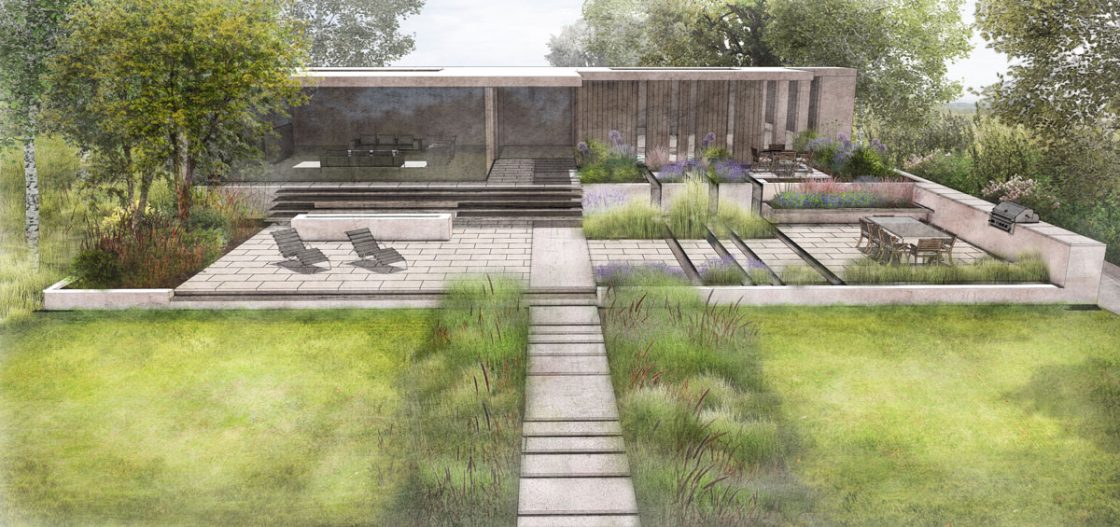
Taking this one step further, the concept  for one paragraph 79 (previously paragraph 55) project we are working on was for the building to have an exceptional ability to blend with the surrounding woodland. Vertical lines here were important throughout both the landscape and architecture in allowing the building to become a part of its setting. The resulting home here, will look both subtle and striking.

The way lines are used within designs is often a driver for the character and emotion of a site, it informs the way a space is used and creates connectivity. So next time you wander through a space, consider the many lines both natural and designed and their connection with both each other and with your experience of that place. You might just be surprised by the way your perspective is transformed.


See our earlier blog Right plant, Right place here.


Photo creditPhoto by James Forbes